









id: 53953
date: 2/23/2006 5:29
refid: 06DUSHANBE337
origin: Embassy Dushanbe
classification: UNCLASSIFIED
destination:
header:
VZCZCXRO5962
PP RUEHLN RUEHVK RUEHYG
DE RUEHDBU #0337/01 0540529
ZNR UUUUU ZZH
P R 230529Z FEB 06
FM AMEMBASSY DUSHANBE
TO RUEHC/SECSTATE WASHDC PRIORITY 6748
INFO RUCNCIS/CIS COLLECTIVE
RUEAIIA/CIA WASHDC
RHEFDIA/DIA WASHINGTON DC
RHEHNSC/NSC WASHDC
RUEHAK/AMEMBASSY ANKARA 1393
RUEHBJ/AMEMBASSY BEIJING 1434
RUEHRL/AMEMBASSY BERLIN 1423
RUEHIL/AMEMBASSY ISLAMABAD 1374
RUEHBUL/AMEMBASSY KABUL 1317
RUEHLO/AMEMBASSY LONDON 1390
RUEHNE/AMEMBASSY NEW DELHI 1348
RUEHFR/AMEMBASSY PARIS 1287
RUEHKO/AMEMBASSY TOKYO 1193
RUEKJCS/SECDEF WASHINGTON DC
RHMFISS/HQ USCENTCOM MACDILL AFB FL
RHMFISS/HQ USEUCOM VAIHINGEN GE
RUCNDT/USMISSION USUN NEW YORK 0974
RUEHNO/USMISSION USNATO 1441
RUEHVEN/USMISSION USOSCE 1476
RUEHBS/USEU BRUSSELS 0767
RUEHDBU/AMEMBASSY DUSHANBE 7863
—————— header ends —————-
UNCLAS SECTION 01 OF 02 DUSHANBE 000337
SIPDIS
SIPDIS
STATE FOR SCA/CEN, G, OES/PCI
TASHKENT FOR ESTH
E.O. 12958: N/A
TAGS: PGOV, PREL, ECON, EIND, SENV, TI
SUBJECT: TAJIKISTAN: FINANCING
NEEDED TO PROTECT URANIUM STORAGE
SITES
DUSHANBE 00000337 001.2 OF 002
1. SUMMARY: Central Asian Regional Environment, Science,
Technology and Health Officer (REO), Regional Environmental
Specialist and Embassy PolOff visited three of ten uranium waste
sites in Tajikistan’s northern Sughd region where processed
uranium waste has been stored since 1942, the start of uranium
mining in Central Asia. Officials
from Voctokredmet (Eastern
Rare Metals Industrial Entity) accompanied EmbOffs February 6.
The improper storage and protection of uranium waste at two of
the three sites raises environmental, health and security
concerns. Radiation levels at one
site reached 50 times the
average background radiation level.
The Tajik government and
Vostokredmet consider security a priority but estimate costs to
be over $250 million, an amount Tajikistan cannot finance. END
SUMMARY.
2. Ten sites in the Sughd region
store 54 million metric tons
of uranium tailings. The sites
are located within and close to
Khujand, Tajikistan’s second biggest city, and near two
villages, Tabashar and Adrasman.
Almost all of the waste
storage sites in northern Tajikistan are near populated areas
and/or close to rivers.
Tajikistan is seismically active and
earthquakes, floods, and the accompanying mud and landslides
threaten to contaminate the environment with uranium waste.
According to Vostokredmet officials, in the past four years,
there have been four instances of materials from the sites being
washed away at Taboshar and Adrasman.
The lack of security
around the sites allows anyone to enter and forage materials.
Scavenging is widespread and impoverished locals look for scrap
metal, which is then shipped to China, and other items that
might be useful.
GAFUROV
3. The Gafurov waste site is the
best planned and maintained of
the three EmbOffs visited. The
former-Soviet government planned
and financed the site right before the end of the Soviet Union.
Gafurov stores 400,000 metric tons of uranium wastes, mostly
from uranium mined in Kyrgyzstan’s Mailyy Suu. The site is a
four-hectare, 14-meter high mound, located on a main road
running between the city of Khujand and the airport. The mound
is fenced, although there are at least two places in the fence
where people can easily enter the site.
Voctokredmet designed
the site and decided that seismic and other conditions precluded
the use of concrete. According to
their research, covering the
uranium waste with several meters of soil and heavily compacting
the first layer would keep the waste from becoming exposed to
the elements. Vostokredmet
officials said the REO Geiger
counter readings of 10-30 CPM, equivalent to .1 to .3
microSievert/hr are not above the normal level of background
radiation.
KARTA 1-9
4. The second site visited, Karta
1-9, covers18-hectare, has no
security walls and looks like abandoned industrial grounds.
Karta 1-9 contains approximately three million metric tons of
uranium waste from across the former Soviet Union and Warsaw
Pact countries. Karta 1-9 has a
thin cover of soil,
approximately one to two meters deep that has not been compacted
or treated in any way. The waste
site is bordered on one side
by a grove of apricot trees and on the other by an abandoned
railroad line and pipes that originally fed liquid uranium waste
to another site. Holes in the
soil cover made by local rodents
are visible throughout. Geiger
counter readings were slightly
above normal in the 20-50 CPM (.2-.5 microSievert/hr) range.
DIGMAY
DUSHANBE 00000337 002.2 OF 002
5. Digmay, the third site
visited, is the most contaminated,
and is located outside of town approximately nine kilometers
from the Syr Darya River. The
site is not well protected.
Small signs forbid entry and a sign from the International
Atomic Energy Agency marks it as a hazardous waste area. A wall
encircles the site, however, the lack of a gate enabled EmbOffs
to drive a large vehicle onto the site.
The site used to be a
reservoir to collect water in the same area where uranium waste
was dumped. Since the end of the
Soviet Union, the reservoir
has dried up, and the uranium waste, approximately 36 million
metric tons, is now open to the air.
EmbOffs witnessed three
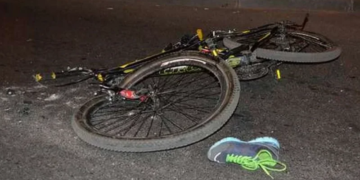
men scouring the area for scrap metal and two bicycle riders
rode through the bottom of the valley, within a few hundred
meters of the most contaminated areas.
EmbOff measured one of
the scavengers’ gloves and they were twice the levels of the
ground he was standing on. CPM
readings were 200-300 CPM (2-3
microSievert/hr) along the top of the site, and the guides
assured us that readings in the dried-out flats, where the
uranium was, would be up to 1,500 CPMs (15 microSievert/hr).
Readings of up to 1,500 CPMs are extraordinarily higher than
those at Gafurov, which measured at 10-30 CPMs and considered
normal. Geiger counter
measurements of the area in which the
scavengers worked measured 200-500 CPM (2-5 microSievert/hr).
6. EmbOffs’ guides were employees
of Vostokredmet, originally
known as Kombinat Number 6 established in Chkalovsk, outside of
Khujand in 1945 ,to process uranium ores from mines in
Tajikistan, Uzbekistan (Ungursoy) and Kyrgyzstan (Mailyy Suu).
One of the Vostokredmet officials proudly informed EmbOffs that
the uranium in the first nuclear weapon tested by the Soviet
Union was mined and manufactured in Tajikistan. Due to its
specialized experience, Kombinat 6 continued uranium processing
using ores from other republics in the USSR (Uzbekistan,
Kyrgyzstan, and Russia) and other Socialist countries (East
Germany, Czechoslovakia, Bulgaria, and Mongolia) even after
uranium mining ceased in Tajikistan.
Because developing nuclear
weapons was a high priority for the former-Soviet Union, uranium
mining and processing also was of high importance. Although
uranium mining in Tajikistan ended in 1956, uranium processing
continues today using ores from other republics in the former
Soviet Union and Socialist countries.
Vostokredmet refines rare
metals on contract and has a number of manufacturing affiliates,
including a jewelry subsidiary, a metal processing equipment
factory, and a scientific research institute.
7. COMMENT: The Vostokredmet officials that accompanied
EmbOffss were very open about the number of sites, the amount of
waste stored, and the storage methods used. They also reported
that Tajikistan had signed the Additional Protocol and
inspectors from the IAEA made annual trips to the known storage
areas. They hoped that more
attention to the state of the
uranium waste storage sites would attract funding to bring the
waste storage sites up to international standards. The
officials estimated that approximately $250 million would be
needed, a sum that would be impossible for the Tajik government
to finance. END COMMENT.
WILSON
=======================CABLE ENDS============================
id: 53954
date: 2/23/2006 5:36
refid: 06DUSHANBE338
origin: Embassy Dushanbe
classification: UNCLASSIFIED
destination:
header:
VZCZCXRO5966
PP RUEHLN RUEHVK RUEHYG
DE RUEHDBU #0338 0540536
ZNR UUUUU ZZH
P R 230536Z FEB 06
FM AMEMBASSY DUSHANBE
TO RUEHC/SECSTATE WASHDC PRIORITY 6750
INFO RUCNCIS/CIS COLLECTIVE
RUEAIIA/CIA WASHDC
RHEFDIA/DIA WASHINGTON DC
RHEHNSC/NSC WASHDC
RUEHAK/AMEMBASSY ANKARA 1395
RUEHBJ/AMEMBASSY BEIJING 1436
RUEHRL/AMEMBASSY BERLIN 1425
RUEHIL/AMEMBASSY ISLAMABAD 1376
RUEHBUL/AMEMBASSY KABUL 1319
RUEHLO/AMEMBASSY LONDON 1392
RUEHNE/AMEMBASSY NEW DELHI 1350
RUEHFR/AMEMBASSY PARIS 1289
RUEHKO/AMEMBASSY TOKYO 1195
RUEKJCS/SECDEF WASHINGTON DC
RHMFISS/HQ USCENTCOM MACDILL AFB FL
RHMFISS/HQ USEUCOM VAIHINGEN GE
RUCNDT/USMISSION USUN NEW YORK 0976
RUEHNO/USMISSION USNATO 1443
RUEHVEN/USMISSION USOSCE 1478
RUEHBS/USEU BRUSSELS 0769
RUEHDBU/AMEMBASSY DUSHANBE 7865
—————— header ends —————-
UNCLAS DUSHANBE 000338
SIPDIS
SIPDIS
STATE FOR SCA/CEN, DRL
E.O. 12958: N/A
TAGS: PGOV, PHUM, KDEM, TI
SUBJECT: TAJIKISTAN: POLITICAL PARTY ACTIVIST FREED FROM JAIL
REF: 05 DUSHANBE 1701
1. Social Democratic Party of
Tajikistan (SDPT) activist and
lawyer Fayzinoso Vohidova was released from prison February 21.
On October 13 the Sughd regional prosecutor’s charged Vohidova
with «forgery and the production and sale of forged
documents»,
«evading tax payments», and «causing damage by means of
deception and breach of confidence». The prosecutor’s office
alleged Vohidova practiced law illegally using a false Moscow
State University diploma.
(REFTEL)
2. Embassy staff spoke to
Vohidova February 22 who reported the
court found her guilty of forgery for possessing a fake diploma,
but dropped the other two charges.
However, according to Tajik
news reports, the Sughd court ruled that Vohidova is guilty of
tax evasion, but dropped the other two charges. (COMMENT:
The
Tajik Press is not renowned for its accuracy. END COMMENT.)
3. The court decided Vohidova had
served enough time during
pretrial detention. According to
Vohidova, as part of her
punishment, she will not be able to occupy official positions or
leadership roles for two years.
She maintains her innocence and
plans to appeal to a higher court.
4. COMMENT: Vohidova has been a vocal critic of the local
Sughd government, particularly the prosecutor’s office and was
also a leading candidate during the February 2005 parliamentary
elections, but was disqualified based on a technicality. The
regional government is likely using her arrest and guilty
verdict as an attempt to discredit her, the SDPT, and her civic
advocacy. Prohibiting her from
holding office and leadership
positions show the arrest was politically motivated,
particularly in a country where many are forced to buy their
diplomas and documentation. END
COMMENT.
WILSON
=======================CABLE ENDS============================
id: 54179
date: 2/24/2006 11:00
refid: 06DUSHANBE359
origin: Embassy Dushanbe
classification: UNCLASSIFIED
destination:
header:
VZCZCXRO7563
PP RUEHLN RUEHVK RUEHYG
DE RUEHDBU #0359 0551100
ZNR UUUUU ZZH
P 241100Z FEB 06
FM AMEMBASSY DUSHANBE
TO RUEHC/SECSTATE WASHDC PRIORITY 6777
INFO RUCNCIS/CIS COLLECTIVE
RHEHNSC/NSC WASHDC
RUEAIIA/CIA WASHDC
RHEFDIA/DIA WASHINGTON DC
RUEHAK/AMEMBASSY ANKARA 1396
RUEHBJ/AMEMBASSY BEIJING 1437
RUEHRL/AMEMBASSY BERLIN PRIORITY 1426
RUEHIL/AMEMBASSY ISLAMABAD PRIORITY 1377
RUEHBUL/AMEMBASSY KABUL PRIORITY 1323
RUEHLO/AMEMBASSY LONDON PRIORITY 1393
RUEHNE/AMEMBASSY NEW DELHI PRIORITY 1351
RUEHFR/AMEMBASSY PARIS PRIORITY 1290
RUEHKO/AMEMBASSY TOKYO PRIORITY 1196
RUEKJCS/SECDEF WASHINGTON DC
RUEKJCS/JOINT STAFF WASHDC
RUEHBS/USEU BRUSSELS PRIORITY 0770
RUMICEA/USCENTCOM MACDILL AFB FL
RUEHNO/USMISSION USNATO PRIORITY 1444
RUEHVEN/USMISSION USOSCE PRIORITY 1479
RUCNDT/USMISSION USUN NEW YORK PRIORITY 0977
RUEHDBU/AMEMBASSY DUSHANBE 7892
—————— header ends —————-
UNCLAS DUSHANBE 000359
SIPDIS
SIPDIS
STATE FOR SCA/CEN, SCA/PAB, SCA/INS, SCA/PPD
E.O. 12958: N/A
TAGS: KMDR, KPAO, OIIP, PREL, PGOV, IR, TI
SUBJECT: IN TAJIKISTAN, THIS WEEK’S MEDIA BOUT GOES TO IRAN
1. Groundbreaking for the
Iran-funded Sangtuda-2 hydropower
station dominated weekly press coverage, from Tajik and Russian
Internet agencies to radio, television, and print media news
outlets. This followed heavy
government and independent media
attention on last week’s announcement of the imminent completion
of the Iran-funded Anzob tunnel linking southern Tajikistan with
its northern territory.
2. In recent weeks, the
government-owned media, including Tajik
television stations, has given Iran the heavy coverage and
positive press it usually gives to Russia. Concerning
Sangtuda-2, President Rahmonov stated, «This is not Iran’s last
contribution . . . Tajikistan and Iran have resumed cooperation
after a hiatus of many years. Iran
was among the first
countries to recognize the independence of Tajikistan.»
Rahmonov lauded the «billion kilowatt hours a year» that
Sangtuda-2 should produce and the great help that Iran is to the
people of Tajikistan.
3. In addition to these two
Iranian building projects, the
Tajik media recently began to highlight Iranian Ambassador to
Tajikistan Nosir Sarmadi Porso’s political statements about
Iran’s right to possess nuclear energy and a host of issues not
specifically concerning Tajik-Iranian bilateral interests.
Tajik and Iranian political leaders alike never fail to mention
the close historical and linguistic similarities between the two
nations.
4. COMMENT: Local Embassy staff were the first to pick up
on
the shift in media attention on Iran, noting the daily
television coverage, front-page newspaper articles, and the
elevation of Tajik-Iranian relations, from construction to
high-level visits. In addition to
the rhetoric of culture
closeness, Iran is letting its investments speak for its
relations with Tajikistan — Sangtuda-2 and the Anzob Tunnel will
cost hundreds of millions to complete over the next few years —
and the Tajik media, directed and independent are paying
attention. END COMMENT.
WILSON
=======================CABLE ENDS============================
id: 54439
date: 2/27/2006 11:53
refid: 06DUSHANBE390
origin: Embassy Dushanbe
classification: CONFIDENTIAL
destination:
header:
VZCZCXRO9774
RR RUEHDBU
DE RUEHDBU #0390/01 0581153
ZNY CCCCC ZZH
R 271153Z FEB 06
FM AMEMBASSY DUSHANBE
TO RUEHC/SECSTATE WASHDC 6811
INFO RUEHRL/AMEMBASSY BERLIN 1427
RUEHLO/AMEMBASSY LONDON 1394
RUCNCIS/CIS COLLECTIVE
RUEHBJ/AMEMBASSY BEIJING 1438
RUEHAK/AMEMBASSY ANKARA 1397
RUEHNE/AMEMBASSY NEW DELHI 1352
RUEHBUL/AMEMBASSY KABUL 1324
RUEHIL/AMEMBASSY ISLAMABAD 1378
RUEAIIA/CIA WASHINGTON DC
RHEFDIA/DIA WASHINGTON DC
RHMFISS/JOINT STAFF WASHINGTON DC
RHEHNSC/NSC WASHINGTON DC
RUMICEA/USCENTCOM INTEL CEN MACDILL AFB FL
RUEPGDA/USEUCOM JIC VAIHINGEN GE
RUCNDT/USMISSION USUN NEW YORK 0978
RUEHBS/USEU BRUSSELS 0771
RUEHKO/AMEMBASSY TOKYO 1197
RUEHDBU/AMEMBASSY DUSHANBE 7927
—————— header ends —————-
C O N F I D E N T I A L SECTION 01 OF 02 DUSHANBE 000390
SIPDIS
SIPDIS
STATE FOR SCA/CEN
E.O. 12958: DECL: 2/14/2016
TAGS: PGOV, PREL, SNAR, RS, TI
SUBJECT: TAJIKS SHOW STRONG ALLEGIANCE TOWARDS U.S. DURING BORDER
CHIEF RECEPTION
CLASSIFIED BY: Richard Hoagland, Ambassador, US Embassy
Dushanbe, State.
REASON: 1.4 (b)
1. (C) SUMMARY:
General Saidamir Zuhurov, Chairman of the
State Border Protection Committee, highlighted the United
States’ close relationship with Tajikistan and Russia’s waning
influence with the Border Guards at a reception in his honor.
The dynamics of the private reception indicated that for all the
press attention on Russian assistance and cooperation, the
Border guards consider the United States a true ally. END
SUMMARY.
2. (C) Senior Law Enforcement Agent (SLEA) and
EmbOff attended
a private reception in General Zuhurov’s honor February 20,
along with the Russian Border Forces, the Russian 201st
Division, members of President Rahmonov’s staff, senior
representatives from various ministries, BOMCA Director Peter
Isaacs and a host of military officers from the Border Guards.
Zuhurov’s aide invited EmbOffs to an exclusive suite within the
restaurant, where the president’s staff and senior ministry
representatives were holding court with Zuhurov. As EmbOffs
entered the back room, Russian Border Forces also barged into
the VIP room, to the evident annoyance of Zuhurov’s aides. When
EmbOffs entered, Zuhurov interrupted a toast in progress to give
a long introduction of SLEA.
3. (C) When the Russian Border Forces Commander
General-Lieutenant Nikolai Kosharin attempted to give a toast,
Tajik Border Guards’ Chief of Staff sidelined him, saying, «We
will all say a few words in [Zuhurov’s] honor and we will drink
together.» Kosharin insisted
on giving a separate toast, and
several other people who did not want to participate in a
collective toast took offense.
The Russian general was then
permitted to give his speech, but from the room’s palpable
tension, the Tajiks appeared uncomfortable with his demand for
the spotlight. During the speech,
Kosharin was interrupted
several times, once by the Chief of Staff who suggested Kosharin
should not comment on Tajikistan’s affairs because he was not
Tajik. In the background, many
commented in Tajiki during and
about the Russian general’s toast.
4. (C) At the end of the reception, Zuhurov
delivered a long
speech in which he profusely thanked the United States and the
U.S. Embassy in Dushanbe for the assistance to the Border Guards
and Tajikistan. He noted the
close working relationship between
the two countries, specifically pointing out Embassy staff and
frequently referred to SLEA as a «good friend.» EmbOffs tried
to excuse themselves from the reception on multiple occasions,
but Tajik persistence and hospitality coerced them back to the
party. In one instance, EmbOffs
were in their vehicle driving
away when they were stopped and persuaded back in.
5. (C) COMMENT:
In front of the Russian guests, senior Tajik
officials openly displayed their close private relationship with
U.S. officials, and at times, their contempt for the Russian
general’s presence. Although the
Russian-biased Tajik media may
report on Russia’s dominance in the region, in reality at least
some senior officials place higher regard on fostering
Tajik-U.S. relations. END
COMMENT.
6. (C) BIO NOTE:
During the reception, the Russian Border
Forces Commander Kosharin introduced EmbOffs to Saidsho
Shamolov, Tajikistan’s recently appointed Military Attachi to
the People’s Republic of China.
He expressed his gratitude for
the position by remarking, «What kind of fucking country is
China? [Rahmonov] should have
sent me to Russia or Germany or
the U.S.!» EmbOff gave
Shamolov his U.S. flag lapel pin, which
Shamolov proudly displayed.
Shamolov is rumored to be among
President Rahmonov’s closest friends and advisors. He served as
a soldier who supported Rahmonov prior to his election to the
presidency. The Russian General
and other Tajik generals have
DUSHANBE 00000390 002 OF 002
told SLEA that Shamolov headed the President’s Personal
Protection Team during and after the Tajik Civil War. He was
responsible for eradicating opposition fighters during the civil
war, and may have led the massacres of other Tajiks. The Tajik
generals noted that Shamolov was assigned as Military Attachi to
China because he was «too tough» for a political appointment.
END BIO NOTE.
HOAGLAND
=======================CABLE ENDS============================
id: 54595
date: 2/28/2006 11:13
refid: 06DUSHANBE394
origin: Embassy Dushanbe
classification: UNCLASSIFIED
destination: 05DUSHANBE1737|06DUSHANBE329|06DUSHANBE394
header:
VZCZCXRO1360
OO RUEHLN RUEHVK RUEHYG
DE RUEHDBU #0394/01 0591113
ZNR UUUUU ZZH
O P 281113Z FEB 06
FM AMEMBASSY DUSHANBE
TO RUEHC/SECSTATE WASHDC IMMEDIATE 6817
INFO RUCNCIS/CIS COLLECTIVE
RHEHNSC/NSC WASHDC
RUEHAK/AMEMBASSY ANKARA PRIORITY 1399
RUEHBJ/AMEMBASSY BEIJING PRIORITY 1440
RUEHRL/AMEMBASSY BERLIN PRIORITY 1429
RUEHIL/AMEMBASSY ISLAMABAD PRIORITY 1380
RUEHBUL/AMEMBASSY KABUL PRIORITY 1326
RUEHLO/AMEMBASSY LONDON PRIORITY 1396
RUEHNE/AMEMBASSY NEW DELHI PRIORITY 1354
RUEHFR/AMEMBASSY PARIS PRIORITY 1291
RUEHTV/AMEMBASSY TEL AVIV PRIORITY 0006
RUEHKO/AMEMBASSY TOKYO PRIORITY 1199
RUEKJCS/SECDEF WASHINGTON DC
RUEKJCS/JOINT STAFF WASHDC
RHMFISS/HQ USCENTCOM MACDILL AFB FL
RHMFISS/HQ USEUCOM VAIHINGEN GE
RHMFISS/HQ USSOCOM MACDILL AFB FL
RUEAIIA/CIA WASHDC
RHEFDIA/DIA WASHINGTON DC
RUEHNO/USMISSION USNATO PRIORITY 1445
RUCNDT/USMISSION USUN NEW YORK PRIORITY 0980
RUEHVEN/USMISSION USOSCE PRIORITY 1480
RUEHBS/USEU BRUSSELS PRIORITY 0773
RUEHDBU/AMEMBASSY DUSHANBE 7933
—————— header ends —————-
UNCLAS SECTION 01 OF 03 DUSHANBE 000394
SIPDIS
SIPDIS
STATE FOR SCA/CEN, DRL/IRF
NSC FOR MILLARD, MERKEL
E.O. 12958: N/A
TAGS: PREL, PGOV, PROP, KIRF, TI
SUBJECT: DUSHANBE SYNAGOGUE DEMOLITION GAINING MEDIA INTEREST
REF: A) DUSHANBE 0329 B) 05 DUSHANBE 1737
DUSHANBE 00000394 001.2 OF 003
1. SUMMARY: The February 8 partial demolition of the
Dushanbe
synagogue (reftel A) is beginning to make waves in the
international media and is stimulating letters of protest to
Embassy Dushanbe from private citizens in the United States.
The media accounts emphasize the reported intemperate and
insensitive remarks that a few Tajik officials allegedly made,
and perpetuate the inaccurate information that the synagogue is
a century old and a historic site.
Because the story is
growing, we propose press guidance in para 7. END SUMMARY.
2. The demolition of the Dushanbe
synagogue is drawing
international attention. Forum 18
News Service (
) provided a detailed and generally
factual account February 22, «TAJIKISTAN: Demolition of
Country’s Only Synagogue Begins.»
February 28, «IsraelInsider»
( ) posted an
op-ed by Shelomo Alfassa, «Our Synagogue is Destroyed. Why are
We Silent?» This article
contrasts international outcry over
the destruction of the Shia’a Shrine in Samara, Iraq, to the
lack of attention to the synagogue story. The «IsraelInsider»
op-ed includes the following:
«~The destruction of the Tajikistan synagogue is the most
disgraceful act committed by a sovereign state toward its Jewish
population since the end of WWII. The Soviet Union and its
successor states may have oppressed and harassed their Jewish
communities, but even at the height of Stalin’s anti-Semitic
purges they did not seek to wipe every element of Jewish
existence like the Tajikistan government.
«It is an ominous message for a Jewish community, that while
living under a government that is attempting to rebuild its
economic, political and social image — it starts by wiping out
the only synagogue in its country.
«The international Jewish community has a responsibility to do
everything it can to help the remaining elderly and
poverty-stricken Jews in Tajikistan. I call upon the worldwide
directors of Jewish organizations, to speak out on this issue.
Write articles, tell your communities about this, telephone, and
email your government officials. Have them condemn this
aggressive assault against a peaceful community. Communicate,
act, help make ‘Never Again’ a reality~.»
3. Both accounts emphasize the
allegedly insensitive and
intemperate comments by several Tajik officials.
4. February 28, Embassy Dushanbe
received an e-mail from a
concerned AmCit in Herndon, Virginia.
Begin text:
Dear Ambassador Hoagland,
I’m a concerned citizen writing to protest the demolition of
Jewish religious sites in Dushanbe between 7 and 22 February
2006. Among the destroyed
buildings was the one and only Tajik
synagogue, which was a century old and in active use by a
juridically recognized religious community.
According to Forum 18, an NGO based in Oslo, Norway, the
demolition was marked by dispute and irregularity
(). The
Jewish community’s claim of ownership was summarily dismissed by
the municipal Religious Affairs Department. Demolition began
DUSHANBE 00000394 002.2 OF 003
without an official assessment or opportunity for comment. The
temporary facilities offered by the Government to Rabbi
Abdurakhmanov are remote from congregants and therefore
inadequate. Since the community
is small, poor and partly
elderly, it is unlikely to have the means to build a new
synagogue.
I’m most troubled by the state’s attitude toward its Jewish
citizens. Dushanbe Religious
Affairs Department head Nuriddinov
branded them liars. Tahir
Rashidov, deputy head of the national
Religious Affairs Committee, countered questions about the
demolition with threats to revoke the Jewish community’s
juridical status. When a
congregant taped the demolitions,
officials warned they would break his camera.
I urge the Department of State, which is committed to the
protection of global religious freedoms, to request an
investigation of the incident and a reconsideration of the
demolition. If Tajikistan is a
modern, tolerant and secular
state, it would better serve these values by protecting its
religious sites and respecting its faith communities. A good
start would be made by rebuilding the synagogue.
I would appreciate a response.
Thank you.
Sincerely,
End text.
5. The Ambassador sent the
following response:
Begin text:
Dear [name withheld]:
I fully share your concern for the Jewish community in
Tajikistan and for the Dushanbe synagogue. I would like to
assure you for three years, ever since the synagogue was given
notice of the impending demolition because of an urban renewal
project, I have followed these developments closely. I have
been in touch with several Jewish communities abroad and with
other diplomatic missions, including the Israeli Embassy. The
synagogue and Tajik government have been engaged in a dialogue
over this issue for years.
Unfortunately, no one has been able
to produce a solution.
Overall, Tajikistan is a religiously tolerant country, and I do
not believe anti-Semitism is involved.
Several Tajik homes and
a mosque in the immediate vicinity of the synagogue were
demolished months ago. The
statements from Tajik officials you
refer to were likely due to political insensitivity and
frustration over the lengthy issue rather than anti-Semitism.
I feel deeply for the community and regret that it is the poor
and disenfranchised who will suffer.
I understand the
synagogue, built in the 1940s, is an important structure for the
community. Unfortunately, the
destruction is irreversible. I
agree with you that to move on, the synagogue should be rebuilt.
I will continue to help as I can;
however, my intervention
alone cannot be decisive. I
encourage you to work with others
to assist the synagogue and its community financially or
otherwise.
Sincerely,
End text.
DUSHANBE 00000394 003.2 OF 003
6. The Ambassador and Mark Levin
of the National Council for
Soviet Jewry have been in frequent touch on the synagogue issue.
February 27, the Ambassador
recommended that Levin and an
appropriate delegation come to Dushanbe soonest to mediate the
problem and, equally important, raise funds for a new synagogue
and community center.
7. If the issue is raised at the
Department’s Daily Press
Briefing, we suggest the following press guidance:
— The U.S. Ambassador to Tajikistan and his staff have followed
this story closely for several years.
They have advocated to
various groups in the United States, Israel, and elsewhere to
work closely with the Dushanbe synagogue and its community.
— Despite reports of intemperate and insensitive remarks by
several Tajik officials about this issue, we believe that
anti-Semitism is not involved. It
is primarily a property
dispute.
— Although the Dushanbe synagogue is widely reported to be
about 100 years old, city records show that it was built in the
1940s. The city of Dushanbe, the
new capital of the then-Tajik
Soviet Socialist Republic, was founded in 1924. The oldest
existing buildings date from the end of the 1920s.
— We will continue to monitor the situation closely, and will
be helpful where we can.
HOAGLAND
=======================CABLE ENDS============================
id: 54626
date: 2/28/2006 13:03
refid: 06DUSHANBE396
origin: Embassy Dushanbe
classification: UNCLASSIFIED
destination:
header:
VZCZCXRO1542
PP RUEHLN RUEHVK RUEHYG
DE RUEHDBU #0396 0591303
ZNR UUUUU ZZH
P R 281303Z FEB 06
FM AMEMBASSY DUSHANBE
TO RUEHC/SECSTATE WASHDC PRIORITY 6821
INFO RUCNCIS/CIS COLLECTIVE
RUEAIIA/CIA WASHDC
RHEFDIA/DIA WASHINGTON DC
RHEHNSC/NSC WASHDC
RUEHAK/AMEMBASSY ANKARA 1402
RUEHBJ/AMEMBASSY BEIJING 1443
RUEHRL/AMEMBASSY BERLIN 1432
RUEHIL/AMEMBASSY ISLAMABAD 1383
RUEHBUL/AMEMBASSY KABUL 1329
RUEHLO/AMEMBASSY LONDON 1399
RUEHNE/AMEMBASSY NEW DELHI 1357
RUEHFR/AMEMBASSY PARIS 1294
RUEHKO/AMEMBASSY TOKYO 1202
RUEKJCS/SECDEF WASHINGTON DC
RHMFISS/HQ USCENTCOM MACDILL AFB FL
RHMFISS/HQ USEUCOM VAIHINGEN GE
RUCNDT/USMISSION USUN NEW YORK 0983
RUEHNO/USMISSION USNATO 1448
RUEHVEN/USMISSION USOSCE 1483
RUEHBS/USEU BRUSSELS 0776
RUEHDBU/AMEMBASSY DUSHANBE 7937
—————— header ends —————-
UNCLAS DUSHANBE 000396
SIPDIS
SIPDIS
STATE FOR SCA/CEN, SCA/PPD, EUR/ACE, DRL
E.O. 12958: N/A
TAGS: PGOV, PHUM, KPAO, TI
SUBJECT: TAJIK GOVT DELAYS PUBLICATION OF OPPOSITION PAPER
REF: A) 05 Dushanbe 1127 B) 05
Dushanbe 1172
1. A local Dushanbe court has
dragged its feet reviewing
Mukhtor Boqizoda’s case, thereby further preventing the
publication of Boqizoda’s «Neru-i Sukhan,» an independent
newspaper critical of President Rahmonov’s administration and
perceived by the government as «opposition.» The government
shut down his newspaper in January 2005.
In July Boqizoda was
allowed to resume printing for one week, and then shut down
again. In August, a Dushanbe
court found Boqizoda guilty of
stealing electricity from an electric company (reftels). After
an investigation cleared Boqizoda, the Supreme Court reviewed
his case and decided February 10 that the local court’s ruling
was invalid. The Supreme Court
instructed the local court to
revise its decision, which would allow Boqizoda’s newspaper to
resume printing. The court was
instructed to review the case
and make a decision on February 24, but Boqizoda told PolOff
February 27 the court had not made a decision yet.
2. According to Boqizoda, a group
of tax inspectors climbed
over the wall of his printing house and raided his offices
January 26, 2005, while he was out of the country. The
inspectors accused him of operating a press without a license,
proper registration, or charter.
After Boqizoda produced all
necessary documents, the police charged him with illegal use of
electricity, claiming he stole electricity from street wires.
When that charge also was proved wrong, they accused him of
stealing electricity from his neighbor.
That allegation, too,
was disproved, and so authorities charged him with stealing
electricity from the electric company, and in August a Dushanbe
court sentenced him to two years in a correctional facility.
(COMMENT: This conviction caused
somewhat of a stir, in that it
was the first time someone was sentenced to jail for a violation
that normally garnered an administrative fine. END COMMENT.)
After an investigation, the electric company confirmed that
Boqizoda did not steal electricity from it.
3. «Neru-i Sukhan’s»
articles and editorials critical of
Rahmonov, Rahmonov’s family, and other government officials made
Boqizoda many enemies. After
publishing an article on Minister
of Foreign Affairs Talbak Nazarov, criticizing him as too old
for the job, Nazarov invited Boqizoda’s close friends in for a
talk, hoping they would convince Boqizoda to stop publishing
disparaging comments. Boqizoda
also accused a professor and
close friend of Mahmadnazar Solehov, Chief of the President’s
Administration, of accepting bribes from students.
4. Boqizoda told PolOff that he
wrote a letter to President
Rahmonov appealing for help, but has not received a response.
He is determined to resume printing «Neru-i Sukhan» once the
local court corrects its decision.
Boqizoda is also awaiting
the arrival of a printing press from the Eurasia Foundation,
which may not be put into use until after the November
presidential election. In
addition, he is planning to publish a
magazine. He has been unemployed
since the government shut down
his publishing house in 2005 and is in financial debt.
5. COMMENT: The Supreme Court would not likely have made
its
decision without prior approval from the President’s office.
Rahmonov may be loosening the chokehold on opposition press
prior to the November presidential election — slightly.
However, the local court may not make its decision until the end
of the year. Even if the court
allowed Boqizoda to resume
printing prior to November, it is likely authorities would find
another excuse to block his publications. END COMMENT.
HOAGLAND
=======================CABLE ENDS============================
id: 54648
date: 2/28/2006 14:58
refid: 06DUSHANBE397
origin: Embassy Dushanbe
classification: UNCLASSIFIED//FOR OFFICIAL USE ONLY
destination: 06STATE3836
header:
VZCZCXRO1710
PP RUEHLN RUEHVK RUEHYG
DE RUEHDBU #0397/01 0591458
ZNR UUUUU ZZH
P R 281458Z FEB 06
FM AMEMBASSY DUSHANBE
TO RUEHC/SECSTATE WASHDC PRIORITY 6822
INFO RUCNCIS/CIS COLLECTIVE
RUEAIIA/CIA WASHDC
RHEFDIA/DIA WASHINGTON DC
RHEHNSC/NSC WASHDC
RUEHAK/AMEMBASSY ANKARA 1403
RUEHBJ/AMEMBASSY BEIJING 1444
RUEHRL/AMEMBASSY BERLIN 1433
RUEHIL/AMEMBASSY ISLAMABAD 1384
RUEHBUL/AMEMBASSY KABUL 1330
RUEHLO/AMEMBASSY LONDON 1400
RUEHNE/AMEMBASSY NEW DELHI 1358
RUEHFR/AMEMBASSY PARIS 1295
RUEHKO/AMEMBASSY TOKYO 1203
RUEKJCS/SECDEF WASHINGTON DC
RHMFISS/HQ USCENTCOM MACDILL AFB FL
RHMFISS/HQ USEUCOM VAIHINGEN GE
RUCNDT/USMISSION USUN NEW YORK 0984
RUEHVEN/USMISSION USOSCE 1484
RUEHBS/USEU BRUSSELS 0777
RUEHDBU/AMEMBASSY DUSHANBE 7938
RUEHAD/AMEMBASSY ABU DHABI 0011
RUEHDE/AMCONSUL DUBAI 0034
RUEHKH/AMEMBASSY USAID
RHMFIUU/DEPT OF JUSTICE WASHINGTON DC
RUEFHLC/DEPT OF HOMELAND SECURITY WASHINGTON DC
RUEHC/DEPT OF LABOR WASHINGTON DC
RUEATRS/DEPT OF TREASURY WASHINGTON DC
—————— header ends —————-
UNCLAS SECTION 01 OF 12 DUSHANBE 000397
SIPDIS
SENSITIVE
SIPDIS
STATE FOR SCA/CEN, G, G/TIP, INL, DRL, PRM, IWI
E.O. 12958: N/A
TAGS: PGOV, PREL, PHUM, PREF, ELAB, KCRM, KWMN, KFRD, ASEC,
SMIG
SUBJECT: TAJIKISTAN’S 2005-2006 TRAFFICKING IN PERSONS REPORT
REF: STATE 3836
DUSHANBE 00000397 001.2 OF 012
1. The following is Embassy
Dushanbe’s 2005-2006 Trafficking in
Persons Report. Post’s lettering
system matches reftel’s.
OVERVIEW OF TAJIKISTAN’S ACTIVITIES TO ELIMINATE TRAFFICKING IN
PERSONS
A. Tajikistan is an origin
country for trafficking.
International trafficking for the purposes of sexual and labor
exploitation is a problem. The
most common destination
countries include the United Arab Emirates, Russia, Turkey,
Saudi Arabia, Kuwait, and Iran.
Reliable statistics do not
exist for the number of victims trafficked. The key
organizations that deal with trafficking—the General
Prosecutor’s Office, the Ministry of Interior and the
International Organization for Migration (IOM)—all have
differing numbers. IOM gathered
the following statistics from
other agencies:
The majority of trafficking victims are female, single, and aged
20 to 26. IOM estimates that at
least 420 women were trafficked
to the UAE and other Arab countries for sexual exploitation in
2005. In 2005, IOM, in
cooperation with the Tajik government,
repatriated 49 women from the UAE.
Trafficking for labor exploitation is primarily to Russia and
the majority are unemployed males.
IOM and a Tajik government
delegation visited Volgograd, Russia, in 2005 and confirmed that
2000 men have been trafficked to Russia for labor exploitation.
The number of victims trafficked for labor exploitation is
unclear. Because of the level of
poverty in Tajikistan,
according to unofficial accounts, up to one million men choose
to go to Russia each year for work mostly in construction or
agriculture. Most of them are
unregistered, often subjected to
poor living conditions, and face prejudice and sometimes
brutality from their bosses and Russian citizens in general.
The majority of the labor migrants choose to go on their own
will. Although IOM does not have
additional facts on male
trafficking victims, it does know that one man was repatriated
from UAE in 2005.
IOM confirmed two children have been trafficked: one to the UAE
for sexual exploitation and one for labor exploitation within
Tajikistan. Child trafficking
victims usually were in the care
of extended family.
Tajikistan is not known to be a receiving country for
trafficking victims; trafficking victims are trafficked out of
Tajikistan. However, there was a
unique case of one man
trafficked from Russia to Tajikistan for slavery purposes.
B. Through the assistance of
international donors, in 2005 the
Tajik government has made significant strides towards preventing
TIP and establishing strong government institutions to fight TIP
in the long term. The Tajik
government established an
inter-agency high-level commission to combat TIP, increased the
number of specialized TIP investigation units throughout the
country, provided more training to law enforcement, and in
February 2006 opened the Ministry of Interior’s (MOI)
Intelligence and Analytical Center for Counter-Narcotics and
Trafficking In Persons. Political
will to combat TIP is strong,
DUSHANBE 00000397 002.2 OF 012
and President Rahmonov has made public statements condemning
trafficking. The government is
keen on securing its borders,
fighting organized crime, drug trafficking and terrorists, and
TIP issues are integrated into these security concerns.
In the MOI’s investigations, the majority of traffickers are
individuals with private links to the receiving country. MOI
believes traffickers may form organized groups, but it did not
find evidence of significant trafficking rings in Tajikistan in
2005. The trafficking process
usually starts with a recruiter
who is a relative, neighbor or colleague of the victim. The
typical trafficker is a middle-aged woman. Other facilitators
in the process include those who organize logistics, including
obtaining false passports and travel documents. Collaborators
in the receiving country prepare accommodations and use their
connections to force the victim into work.
Traffickers primarily target socially and economically
vulnerable people in all parts of Tajikistan. Many are new
arrivals to Dushanbe or Khujand from rural areas with little
formal education. The Sughd
region leads the country in the
number of trafficking cases reported.
The region’s proximity to
Kyrgyzstan makes it easy for traffickers to move victims across
the border and on to other international points. Approximately
64% of the population lives under the poverty line, and
thousands of Tajiks regularly leave the country in search of
better income opportunities. Many
of these economic migrants,
especially from the rural areas, become victims of cross-border
trafficking. Victims are
typically approached either with
offers of lucrative jobs abroad or by a direct offer to work as
prostitutes.
C. The General Prosecutor’s
office and IOM pointed out that the
Trafficking In Persons Law (Article 130) is inadequate. In 2005
no one was convicted under article 130.
The poorly-written
law’s structure and gaps make it difficult to convict a
trafficker. The General
Prosecutor’s office is working on
redrafting the law.
The lack of extradition agreements between Tajikistan and Arab
countries, particularly the United Arab Emirates, where the
largest percentage of victims are trafficked, prevents
Tajikistan from repatriating victims and criminals. The
government’s inter-agency commission under the Presidential
Advisor’s Office is working on drafting extradition agreements
and establishing greater formal cooperation ties between
Tajikistan and the U.A.E.
On the other hand, Tajikistan’s close relationship with other
Commonwealth of Independent States countries affords it a loose
travel regime. Tajik citizens are
not required to obtain
passports for international travel to countries like Kyrgyzstan,
where increasingly more victims are trafficked. Because of
tighter Tajik travel restrictions, traffickers are electing to
take victims across the border to Kyrgyzstan by road and fly to
the U.A.E. and other destinations via Osh.
The government acknowledges that government officials do aid
traffickers for money. Some
passport officials issue illegal
passports so victims can travel outside Central Asia and Russia;
employees responsible for issuing birth and marriage
DUSHANBE 00000397 003.2 OF 012
certificates provide false documents so that traffickers can
travel with the victims and victims can travel outside of the
country into the U.A.E., where the majority of female victims
are trafficked. The UAE prohibits
women from Tajikistan under
30 years of age to enter the UAE without a relative or spouse
escort. The General Prosecutor’s
office did not maintain
specific records on corrupt bureaucrats involved in TIP, but
estimated that the office prosecuted two or three corrupt
bureaucrats in 2005.
Tajikistan has received millions of dollars from donor countries
and agencies in the fight against trafficking in persons. Most
of the aid has gone into anti-TIP efforts including training
government officials, equipping investigative units, assisting
victims and educating the public.
The government has strong
political will to combat TIP, but must rely on international
donors to provide these services.
D. Each ministry or government
agency collects data and has one
or two people responsible for analyzing the data. There is no
central inter-agency government database. The State Migration
Service, with the help of IOM, in early 2006 established a
database to track trafficking acts.
A Data Analysis Center in
the State Border Protection Committee at Dushanbe Airport
monitors travelers’ data in and out of Tajikistan. IOM also
collects data from various agencies for its own analysis;
however, they feel hindered by unreliable data. The
government shares information with the media which publishes
TIP-related news items on a regular basis, but to date has not
published in-depth analytical reports.
In February 2006, with
U.S. funding, the Ministry of Interior opened an Intelligence
and Analytical Center for Counter-Narcotics and Trafficking In
Persons. This center will be a
central point for trafficking
data collection and analysis. The
General Prosecutor’s Office
noted they are drafting their own TIP analysis.
PREVENTION
A. The Tajik government
acknowledges that trafficking is a
problem in Tajikistan, has strong political will to stop
trafficking, and has taken measures to stop the problem. The
government has a high-level inter-agency commission to
coordinate anti-TIP activities.
B. Several ministries and
agencies in Tajikistan focus on TIP.
Although the government institutions communicate with each
other and NGOs, there has been a lack of true coordination, and
no agency has taken the lead in handling anti-TIP efforts. The
government’s new National Action Plan outlines specific roles
for each ministry and agency in handling TIP issues.
A special inter-agency commission of high-level officials from
various ministries and President Rahmonov’s administration works
on coordinating anti-TIP efforts.
However, the MOI sees the
Commission’s role less focused on coordination, but rather on
assisting with victim repatriation.
The Ministry of Foreign
Affairs takes the lead on working with countries like the U.A.E.
to try to repatriate victims, establish extradition agreements
and cooperation with government agencies. The Ministry of
DUSHANBE 00000397 004.2 OF 012
Interior is responsible for investigations, and arrests in
trafficking cases. Tajikistan’s
police force and special police
TIP units fall under the MOI. The
General Prosecutors Office,
working with the judicial system, is responsible for prosecuting
and sentencing TIP violators. The
Ministry of Labor and Social
Protection takes the lead on labor migration, and under the new
National Action Plan, the Ministry of Health will have a larger
role in assisting the rehabilitation of victims. Other
ministries and agencies working in trafficking problems include
the State Border Protection Committee, Parliament’s Committee
for Women and Family Affairs and Committee on Constitutional
Legality, Legislation and Human Rights, and the Ministry of
Security.
C. The government has developed
its own awareness campaigns and
provides input to IOM’s campaigns.
It supports local and
international NGOs in TIP education. The government occasionally
will issue press statements and relies on the media to
disseminate its information on TIP.
There is no explicit
information campaign. During the
year, IOM ran TIP awareness
campaigns throughout the country.
The government, local and
international NGOs also raise awareness by educating high school
aged students about TIP.
Education and awareness campaigns in
the country are targeted at potential victims.
D. Beginning in March of 2005,
the government established a
24-hour telephone hotline with trained operators to provide
information and counsel callers on TIP.
The government has
conducted conferences, roundtables and seminars to train
trainers how to educate people about the dangers of TIP. Local
and international NGOs run programs and training programs to
empower women. Specifically, the
government has worked with
CARE International and USAID to address the failing education
system and decreasing school attendance of girls, recognizing
that these factors will exacerbate poverty and increase the
likelihood of trafficking.
E. Please note that reftel
omitted paragraph E.
F. Tajik government agencies,
particularly the Ministry of
Interior and Ministry of Labor, cooperate closely with the U.S.
Embassy, other diplomatic missions, donor agencies, and NGOs on
TIP issues and are forthcoming with information. IOM, the
leading anti-TIP agency in Tajikistan, reported an excellent
working relationship with the government. In February 2006, IOM
signed a Memorandum of Understanding with the inter-agency
commission on combating TIP. IOM
has a close working
relationship with the Ministry of Foreign Affairs, Ministry of
Interior, Ministry of Security, Ministry of Labor and Social
Protection and General Prosecutor’s Office. Similarly, within
the government, ministries and agencies work closely and are
open with information.
G. Each government agency that
deals with TIP has at least one
or two people responsible for collecting and analyzing the
agency’s data. Border guards are
stationed in Dushanbe’s
airports and along border checkpoints.
Border guards are
DUSHANBE 00000397 005.2 OF 012
trained to screen for potential traffickers and victims. A Data
Analysis Center in the State Border Protection Committee at
Dushanbe Airport monitors travelers’ data in and out of
Tajikistan. The State Migration
Service, with the help of IOM,
in early 2006, established a database to track trafficking acts.
In February 2006, the MOI opened
a U.S.-funded Intelligence and
Analytical Center for Counter-Narcotics and Trafficking In
Persons.
H. Government agencies work
closely together on TIP issues on
an ad-hoc basis. An inter-agency
commission for combating TIP
is supposed to coordinate the ministries’ TIP activities.
Officials from the President’s Office sit on the commission
along with senior officials from the ministries that deal with
TIP. Based on discussions with
various agencies, the commission
focuses more on extradition and inter-government relations than
being a coordination unit or internal center for information.
Its coordination role is implicit in that it is housed under the
President’s Advisors’ Office which is in charge of all
government ministries and agencies.
The government’s chief
point of contact would be the head of the inter-agency
commission’s head, the Chief of the Department of Law and Order
and Defense, Abdurahmon Azimov.
The National Action Plan, which
the government is expected to adopt this year, outlines each
agency’s activities and is a focal point for coordination. The
government had set up a separate anti-corruption task force in
June 2004 within the General Prosecutor’s Office.
I. Please note that reftel
omitted paragraph I.
J. The government, with heavy IOM
input, drafted a National
Action Plan in 2005 for combating TIP for 2006-2010. It is
currently in the approval process.
The various ministries and
agencies involved in the National Action Plan have cleared on
it, and the Plan is now being sent through the President’s
Administration for President Rahmonov’s signature. The Plan
serves as a legally binding document that commits each agency to
realizing its goals outlined in the National Action Plan. The
Plan coordinates the government’s action and clarifies its
goals. The Plan will assist
government agencies and
organizations working with the government to implement projects
in line with Tajikistan’s anti-TIP policy. Government agencies
with a role in the National Action Plan include the Ministry of
Interior, Ministry of Security, the State Border Protection
Committee (Border Guards), the General Prosecutor’s Office, the
Ministry of Labor and Social Protection, and the Ministry of
Defense, in cooperation with IOM.
INVESTIGATION AND PROSECUTION OF TRAFFICKERS
A. The government did not
introduce or amend TIP-related laws
in 2005. Tajikistan does have an
article in its criminal code
specifically for human trafficking-article 130.1. Tajikistan’s
trafficking laws do not differentiate between trafficking for
sexual exploitation and trafficking for non-sexual purposes such
as forced labor. The country does
not have a law against
slavery. The following is the
comprehensive Law of the Republic
of Tajikistan on Combating Trafficking in Persons adopted August
DUSHANBE 00000397 006.2 OF 012
2004; traffickers are prosecuted under the articles of the
following criminal codes: 122
(Coercion for removal of human
organs and tissues for transplantation), 130 (Kidnapping), 130.1
(Human trafficking), 131 (Illegal imprisonment), 132
(Recruitment of people for exploitation), 134 (Coercion), 138
(Rape), 139 (Sexual abuse), 140 (Compulsion for sexual
activities), 141 (Sexual intercourse or other sexual activities
with persons under 16), 142 (Lecherous actions), 149 (Incorrect
limitation of migration, freedom of choosing place of residence,
emigration and returning of a citizen), 167 (Trafficking
minors), 171 (Substitution of child), 172 (Illegal adoption),
238 (Involvement in prostitution), 239 (Establishment or keeping
of dens, procuring or pimping), 335 (Illegal crossing of state
border), 336 (Violation of state border regulations), 339 (Theft
or damaging documents, stamps, seals), 340 (Forgery,
manufacturing or sale of for