







id: 74754
date: 8/14/2006 12:58
refid: 06DUSHANBE1557
origin: Embassy Dushanbe
classification: CONFIDENTIAL
destination: 06STATE132517
header:
VZCZCXRO9687
PP RUEHDBU
DE RUEHDBU #1557 2261258
ZNY CCCCC ZZH
P R 141258Z AUG 06
FM AMEMBASSY DUSHANBE
TO RUEHC/SECSTATE WASHDC PRIORITY 8361
INFO RUCNCIS/CIS COLLECTIVE
RUEAIIA/CIA WASHDC
RHEFDIA/DIA WASHINGTON DC
RHEHAAA/NSC WASHINGTON DC
RUEHAK/AMEMBASSY ANKARA 1760
RUEHBJ/AMEMBASSY BEIJING 1762
RUEHRL/AMEMBASSY BERLIN 1711
RUEHIL/AMEMBASSY ISLAMABAD 1752
RUEHBUL/AMEMBASSY KABUL 1711
RUEHNE/AMEMBASSY NEW DELHI 1718
RUEHLO/AMEMBASSY LONDON 1649
RUEHBS/USEU BRUSSELS 1038
RUCNDT/USMISSION USUN NEW YORK 1280
RUEHKO/AMEMBASSY TOKYO 1487
RHMFISS/HQ USCENTCOM MACDILL AFB FL
RHMFISS/HQ USEUCOM VAIHINGEN GE
RUEHNO/USMISSION USNATO 1679
RUEKJCS/JCS NMCC WASHINGTON DC
RUEHVEN/USMISSION USOSCE 1731
RUEHML/AMEMBASSY MANILA 0073
RUEHDBU/AMEMBASSY DUSHANBE 9727
—————— header ends —————-
C O N F I D E N T I A L DUSHANBE 001557
SIPDIS
SIPDIS
STATE FOR SCA/CEN
NSC FOR MERKEL
E.O. 12958: DECL: 8/14/2016
TAGS: PREL, PGOV, MARR, IR, TI
SUBJECT: TAJIK FOREIGN MINISTER DISAPPOINTED IN ISRAEL
REF: STATE 132517
CLASSIFIED BY: Tom Hushek, Charge d’Affaires, U.S. Embassy,
Dushanbe, State.
REASON: 1.4 (d)
1. (C) Tajik Foreign Minister Talbak Nazarov
responded to the
points on UNSC resolution 1701 (reftel) by voicing his concern
over the situation in Lebanon and the Palestinian Territories.
In a 45-minute discussion with Charge, Nazarov suggested Israel
should compensate Lebanon for the «$3 billion» in damage it
has
caused. In his opinion, the
military response was
disproportionate for two soldiers taken by Hezbollah,
particularly considering the number of civilian casualties.
«Lebanon has no anti-aircraft forces, no major army» to
counter
an Israeli «mass attack.»
He criticized the high numbers of
women and children victims reported, compared to figures of just
40 Hezbollah fighters killed.
2. (C) He also accused Israel of conducting a
«Blitzkrieg»
using Palestinian territory as a «firing range.» He considered
it a «crime» that large-scale military operations in Gaza
began
as the result of one solider being taken. Nazarov observed that
thousands of Arabs were in Israeli prisons, and Israel also
arrested parliamentarians and deputy ministers in response.
3. (C) «We have very good relations with
Israel,» he noted,
«But I am personally very disappointed with their actions. They
are now isolated from the rest of the world.» He noted that
Germany rarely comments on Israel, positive or negative, but
now, even German public opinion is against the Israeli actions
in Lebanon. «Israel doesn’t need to behave like this,» he
said.
«How did the Prime Minister come to this position? Previous
Prime Ministers behaved differently.» He cautioned that Israel
«seriously miscalculated» its actions and as a consequence, it
neighbors would soon start arming themselves. «We used to
admire the Israeli intelligence service,» for its skill and
precision, he said, «but now it seems it was all a myth. Anyone
can use brute force.» He
predicted that many Israeli citizens,
displeased by their government’s actions, would look for
possibilities to emigrate, including back to the countries of
the former Soviet Union.
4. (C) COMMENT:
Nazarov rarely comments negatively about
international events, so his sharp remarks about Israel
represent an unusual side to the foreign minister. Tajikistan
has traditionally taken a neutral approach to events in the
Middle East and has maintained cordial relations with Israel.
The disappointment Nazarov expressed suggests that Israel’s
motivations are poorly understood in Dushanbe. END COMMENT.
HUSHEK
=======================CABLE ENDS============================
id: 74866
date: 8/15/2006 3:05
refid: 06DUSHANBE1558
origin: Embassy Dushanbe
classification: UNCLASSIFIED
destination: 06DUSHANBE1469
header:
VZCZCXRO0305
PP RUEHLN RUEHVK RUEHYG
DE RUEHDBU #1558/01 2270305
ZNR UUUUU ZZH
P R 150305Z AUG 06
FM AMEMBASSY DUSHANBE
TO RUEHC/SECSTATE WASHDC PRIORITY 8362
INFO RUCNCIS/CIS COLLECTIVE
RUEAIIA/CIA WASHDC
RUEHAK/AMEMBASSY ANKARA 1761
RUEHBJ/AMEMBASSY BEIJING 1763
RUEHRL/AMEMBASSY BERLIN 1712
RUEHIL/AMEMBASSY ISLAMABAD 1753
RUEHBUL/AMEMBASSY KABUL 1712
RUEHLO/AMEMBASSY LONDON 1650
RUEHNE/AMEMBASSY NEW DELHI 1719
RUEHFR/AMEMBASSY PARIS 1496
RUEHKO/AMEMBASSY TOKYO 1488
RUEKJCS/SECDEF WASHDC
RUCNDT/USMISSION USUN NEW YORK 1281
RUEHNO/USMISSION USNATO 1680
RUEHVEN/USMISSION USOSCE 1732
RUEHBS/USEU BRUSSELS 1039
RUEHDBU/AMEMBASSY DUSHANBE 9728
—————— header ends —————-
UNCLAS SECTION 01 OF 03 DUSHANBE 001558
SIPDIS
STATE FOR SCA/CEN, SCA/A
SCA FOR R. DEUTSCH
NSC FOR MERKEL, MILLARD
SIPDIS
E.O. 12958: N/A
TAGS: PGOV, PREL, ECON, EAID, EAGR, ENRG, AF, TI
SUBJECT: TAJIKISTAN AND AFGHANISTAN:
LET THE FLOOD GATES OF WATER
COOPERATION OPEN
REF: DUSHANBE 1469
DUSHANBE 00001558 001.2 OF 003
1. SUMMARY: Senior Afghan water officials visited
Tajikistan
August 2-9 to discuss bilateral
cooperation in developing joint
projects along the Amu Darya and Pyanj Rivers, which form the
Afghan-Tajik border. The highly
successful visit initiated a
practical dialogue and strong partnership between government
officials, resulted in two draft Memorandums of Understanding,
and fostered an optimistic and eager outlook on transboundary
water cooperation which will help to integrate and develop the
economies of Tajikistan and Afghanistan by harnessing hydropower
and developing irrigation systems for commercial agriculture.
Both governments strongly welcome the U. S. role in fostering
technical capacity and political will in both countries towards
resolution of complex and sensitive transboundary water issues.
END SUMMARY.
2. The First Deputy of Minister
of Energy and Water, Kamullidin
Nezami, accompanied by two Afghan advisors and two senior
officials from Embassy Kabul’s Afghan Reconstruction Group
toured Tajikistan August 2-9 to meet with senior Tajik
government officials and study strategic water development
projects. Highlights among the
delegation’s many field visits
included the site where the Afghans propose building a future
irrigation and hydropower dam at the upper Amu Darya, after the
Pyanj and Vaksh Rivers converge.
The irrigation dam and 400 km
canal siphoning water from the Amu Darya into northern
Afghanistan could provide water to irrigate 500,000 hectares of
land which would help introduce commercial agriculture in this
remote corner of Afghanistan. (NOTE: This 1000 MW Upper Amu
Darya hydropower dam is included in the Tajik schematic for
developing the river, but has not been a high priority for the
Tajiks prior to this visit. They
place greater priority on
developing hydropower stations at Dhasti-Jhum, Granite Gates and
Roghun. END NOTE.)
3. In addition, the group visited
the Chubek Canal along the
Pyanj River which separates Tajikistan and Afghanistan and
eventually flows into the Amu Darya.
The Asian Development Bank
is providing about $22 million for stream bank protection and
reinforcement with concrete structures to prevent massive
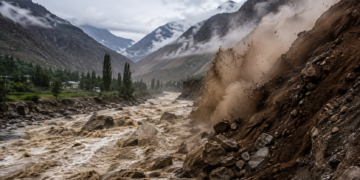
flooding. Last year, floods
destroyed homes and killed several
people along the banks of the river.
Similar needs exist on the
Afghan side of the border, but so far the flood control projects
are only on the Tajik side. Joint projects are required to
avoid detrimental consequences
for the Afghan side of the
border.
4. The group also visited the
proposed site for the Upper Darya
Irrigation Diversion Dam which could be used to open large areas
of Northern Afghanistan to irrigation.
The Afghans would like
this dam built in conjunction with the Dhasti-Jhum Hydroelectric
Dam, which would be the «Hoover Dam» of Central Asia (reftel).
The team visited various
other irrigation diversion and
control structures and the Nurek dam and hydroelectric power
station, the largest rock-fill dam in Central Asia.
5. Meetings with Tajik officials
including the Minister of
Water, Abdukahir Nazirov, established a good working
relationship between the two groups.
Throughout the country,
the Tajiks welcomed their Afghan counterparts with open arms,
bestowed on them traditional Tajik gifts and of course treated
them to the requisite large lunch and dinner feasts, one of
which included five main courses of meat. In deference to their
Afghan colleagues, the Tajik hosts served these meals without
the usual vodka toasting. A
shared language and common culture
will help to facilitate communication and ease future exchanges
of technical experts.
TWO MOUS ARE BETTER THAN ONE
6. Tajikistan’s State Committee
on Environmental Protection’s
Agency for Hydrometeorology drafted a draft Memorandum of
DUSHANBE 00001558 002.2 OF 003
Understanding for Nezami proposing the establishment of water
gauging stations along the Amu Darya and Pyanj rivers. Staff
gages and manual water measurements were once used, but the
Tajiks have been unable to access the Afghan side of the border
for manual measurements for the last 15 years. Water
measurement is crucial for developing water allocation options
between the republics and for planning of projects and
implementing measures to prevent massive flooding, which takes
lives, destroys homes, and erodes
the river’s banks causing
millions of dollars worth of damage each year. Modern gauging
stations will provide needed data for future projects such as
large dams and irrigation diversion structures to regulate and
manage the water flow. The two
governments are currently
negotiating the MoU’s terms. No
major hurdles are foreseen and
it is expected that both governments will sign a final MoU in
the near future.
7. The Tajik Ministry of Water
and Land Reclamation is
preparing an overarching MoU on joint cooperation for projects
along the Amu Darya for Afghan consideration. The draft MoU
will serve as a basis for future cooperation and will include
items such as Tajik assistance in design of dams and structures
and agreement to collaborate on future infrastructure projects
along the Pyanj and Amu Darya.
This point is particularly
salient for the proposed Dhasti-Jhum hydroelectric dam project.
In order for the dam to be constructed and to be successful,
both countries need to reach an official understanding of water
use and sharing along the river.
Afghan and Tajik officials
also discussed submitting joint proposals to international
financial institutions for development projects which would
benefit both countries.
U.S. ASSISTANCE NEEDED
8. The United States plays a
strong leadership role on water
sharing issues in Central Asia.
In meetings with EmbOffs,
Afghan First Deputy Minister of Water Nezami and Tajikistan’s
Minister of Water and Land Reclamation Nazirov both requested
U.S. support in facilitating transboundary water cooperation.
Afghanistan and Tajikistan do not have the technical or
financial capacity to train specialists, develop legislation for
water management, or pursue infrastructure projects alone. The
United States can provide assistance by:
— Developing exchange programs to send Afghans and Tajiks
specialists to the United States for technical training;
— Supporting specialists from the United States to work in
Afghanistan and Tajikistan in advisory roles on water management
issues;
— Providing political support for worthwhile joint proposals of
project development along the Pyanj and Amu Darya River; and
— Identifying financial resources to fund dams, hydroelectric
facilities, irrigation, water supply and management projects.
9. Transboundary water issues in
Central Asia are politically
sensitive. Afghanistan has no
water sharing agreement with
Tajikistan, Turkmenistan or Uzbekistan which will be necessary
to prevent international conflicts over water in the Amu Darya.
Dushanbe and Kabul have gotten off to a good start and with
assistance from the United States should be able to develop
practical bilateral water sharing agreements. Once this is
done, Afghanistan and Tajikistan will be able to address the
more complex issues of water sharing with Uzbekistan and
Turkmenistan. The Tajik Minister
of Water and the Afghan First
Deputy Minister for Water specifically requested U.S. assistance
in facilitating long term regional agreements equitable to all
countries.
10. Post considers this visit a
significant step forward,
particularly in terms of the South and Central Asian regional
integration initiative. In a
region beset by narcotics and
terrorism, water has not always been at the forefront of policy
DUSHANBE 00001558 003.2 OF 003
or funding decisions. If Afghans
and Tajiks can develop working
relationships on water, we are confident they will be able to
parlay those relationships to other sectors. The water
cooperation will also help realize the region’s hydropower
potential and lead towards the economic integration necessary
for long-term stability.
HUSHEK
=======================CABLE ENDS============================
id: 75048
date: 8/16/2006 11:55
refid: 06DUSHANBE1573
origin: Embassy Dushanbe
classification: UNCLASSIFIED
destination: 06DUSHANBE1314|06DUSHANBE626
header:
VZCZCXRO1753
RR RUEHLN RUEHVK RUEHYG
DE RUEHDBU #1573/01 2281155
ZNR UUUUU ZZH
R 161155Z AUG 06
FM AMEMBASSY DUSHANBE
TO RUEHC/SECSTATE WASHDC 8378
INFO RUCNCIS/CIS COLLECTIVE
RUEHAK/AMEMBASSY ANKARA 1764
RUEHIL/AMEMBASSY ISLAMABAD 1756
RUEHBUL/AMEMBASSY KABUL 1715
RUMICEA/USCENTCOM INTEL CEN MACDILL AFB FL
RUEPGDA/USEUCOM JIC VAIHINGEN GE
RUEAIIA/CIA WASHDC
RHEFDIA/DIA WASHINGTON DC
RUEKJCS/JCS NMCC WASHINGTON DC
RUCPDOC/DEPT OF COMMERCE WASHINGTON DC
RHEHNSC/WHITE HOUSE NATIONAL SECURITY COUNCIL WASH DC
RUEHNE/AMEMBASSY NEW DELHI 1722
RUEHBJ/AMEMBASSY BEIJING 1766
RUEHDBU/AMEMBASSY DUSHANBE 9749
—————— header ends —————-
UNCLAS SECTION 01 OF 02 DUSHANBE 001573
SIPDIS
SIPDIS
SENSITIVE. NOT FOR INTERNET DISTRIBUTION.
E.O. 12958: N/A
TAGS: PGOV, ECON, EAIR, EAID, TI
SUBJECT: TAJIK AIR STILL NOT SOARING
REF: A) DUSHANBE 1314 B) DUSHANBE
626
DUSHANBE 00001573 001.2 OF 002
1. (U) SUMMARY: On the surface, two recent developments in
the
airline sector appeared to signal forward progress. However,
despite opening the long-completed air terminal at Khujand and
coming closer to leasing two Airbus aircraft, Tajik Air remains
a protectionist, Soviet-style state-run entity, flying in the
wrong direction. Without the
modernization and significant
restructuring donors have long recommended, Tajik Air will
continue to frustrate Western passengers while lining the
pockets of a handful in power. END SUMMARY.
BETTER AIRCRAFT INCOMING?
2. (U) An August 2 press release announced that
state-owned
Tajikistan State Air (TSA) signed a Memorandum of Understanding
to lease two Airbus 320 aircraft from the India-based Sister
Trading Company, according to a representative of the trading
company. Under the preliminary
agreement, Sister Trading will
«wet lease» the aircraft, pilots and technical support crew
for
a one-year period, costing Tajik Air $2,500 per hour. The 150
passenger aircraft will serve international routes 30 hours per
month. Representatives of TSA
declined to comment until the
agreement was signed. However,
according to the Air Code, the
legislation that regulates Tajikistan’s airspace, only citizens
of Tajikistan are allowed to be a member of crew. It is unclear
how an international crew under «wet-lease» would be able to
operate an aircraft.
3. (SBU) Tajik Air has long toyed
with the idea of leasing
either Boeings or Airbuses to upgrade their aging fleet of
Soviet-era Tupelovs and Yaks.
President Rahmonov is rumored to
want new Western planes flying under a Tajik flag at any cost,
particularly before Tajikistan’s 15th anniversary of
independence September 9. Despite
much talk about leasing
Boeings, and several fruitless discussions between the
government and Boeing’s representative in Moscow, TSA
representatives have not disclosed any concrete plan to lease
any particular aircraft (Reftel A).
The Sister Trading Company,
previously reported to be located in Dubai, has undisclosed
backers, possibly a Tajik businessman looking to capitalize on
personal connections to Tajik Air.
4. (SBU) The current structure of
Tajik Air may be designed to
serve President Rahmonov’s needs first, and the customer base
second. At present, Tajik Air has
one Tupelov-154M for
President Rahmonov’s trips. He
travels once or twice per month
on average, costing Tajik Air hundreds of thousands of dollars
per year. Were Tajik Air to
privatize, as donors and advisors
have long recommended, President Rahomonov would need to pay out
of the budget or from the «President’s account» for his trips.
The current organization of Tajik Air makes it possible for
President to travel for «free» as Tajik Air fully covers the
President’s expenses.
5. (SBU) The European Bank for
Reconstruction and Development
(EBRD) offered Tajikistan a $5 million commercial credit to
modernize its operations months ago, but TSA has yet to meet the
audit requirements and fully take advantage of the assistance.
The EBRD project includes a component for training pilots for
western carriers, but does not support the wet lease approach to
upgrading the fleet, due to the high costs. The EBRD credit
could also help Tajik Air operate profitably with leased jets.
However, at an estimated $200-$300 thousand per month each,
according to the Dushanbe EBRD representative, Tajik Air would
need to reform business practices and reduce costs by over 50%
in order to become profitable.
KHUJAND AIR TERMINAL OPEN FOR
BUSINESS — TWO YEARS AFTER
COMPLETION
6. (U) On August 5, Authorities
officially opened a new
international terminal in the northern city of Khujand. The
terminal was completed in 2004, but sat dormant due to
bureaucratic wrangling and political jealously, possibly
involving the President’s family demanding a significant share
in the company (Reftel B). Nurullo
Usmonov, chairman of
«Noorafshon», the company that constructed the terminal, said
in
his inaugural remarks that the terminal would provide jobs for
300 people and hoped to host transit flights with Indian and
British air companies. The new
international terminal includes
a zone for duty-free trade, business-center with computers
connected to Internet, and a mosque.
DUSHANBE 00001573 002.2 OF 002
7. (SBU) COMMENT: The opening of the Khujand international air
terminal and the announcement about leasing Airbuses from a
little-known trading company do not represent real progress in
Tajikistan’s airline sector, but instead suggest that things
only happen after the right palm has been greased. Leasing
planes under a hurry-up wet lease agreement will ultimately
hemorrhage money and instead of demonstrating that Tajik Air is
modernizing, will show the world just how little TSA has managed
to reform. END COMMENT.
HUSHEK
=======================CABLE ENDS============================
id: 75141
date: 8/17/2006 4:12
refid: 06DUSHANBE1575
origin: Embassy Dushanbe
classification: UNCLASSIFIED
destination:
header:
VZCZCXRO2503
RR RUEHLN RUEHVK RUEHYG
DE RUEHDBU #1575 2290412
ZNR UUUUU ZZH
R 170412Z AUG 06
FM AMEMBASSY DUSHANBE
TO RUEHC/SECSTATE WASHDC 8380
INFO RUEHDBU/AMEMBASSY DUSHANBE 9754
RUCNCIS/CIS COLLECTIVE
RUEHAK/AMEMBASSY ANKARA 1766
RUEHIL/AMEMBASSY ISLAMABAD 1758
RUEHBUL/AMEMBASSY KABUL 1717
RUMICEA/USCENTCOM INTEL CEN MACDILL AFB FL
RUEPGDA/USEUCOM JIC VAIHINGEN GE
RUEAIIA/CIA WASHDC
RHEFDIA/DIA WASHINGTON DC
RUEKJCS/JCS NMCC WASHINGTON DC
RHEHNSC/WHITE HOUSE NATIONAL SECURITY COUNCIL WASH DC
RUEHNE/AMEMBASSY NEW DELHI 1724
RUEHBJ/AMEMBASSY BEIJING 1768
—————— header ends —————-
UNCLAS DUSHANBE 001575
SIPDIS
SIPDIS
STATE FOR SCA/CEN, DRL
E.O. 12958: N/A
TAGS: PGOV, KDEM, TI
SUBJECT: TAJIKISTAN: FORMER DCA CHAIRMAN SENTENCED TO LIFE IN PRISON
1. (U) A Tajik court sentenced former Drug Control
Agency
Chairman, Lieutenant General Ghaffor Mirzoyev August 11 to life
imprisonment for planning to overthrow Tajikistan’s President
Rahmonov. Mirzoyev was arrested
August 6, 2004 and officially
charged with 36 crimes including attempt to topple the regime,
murder, illegal possession of massive amounts of firearms, drug
smuggling and illegal privatization of government property. The
General Prosecutor’s office asked for the death penalty as
punishment. However, Tajikistan
has an official moratorium on
the death penalty and Mirzoyev received life in prison.
Mirzoyev pled not guilty to all charges and will appeal the
court decision and sentencing.
Fifteen of his supporters have
also been imprisoned.
2. (SBU) According to the press and Embassy sources,
the trial
was closed from the public because evidence was deemed as «state
secrets,» which is legal under Tajik law. A fellow Kulobi,
SIPDIS
Mirzoyev was one of President Rahmonov’s closest advisors during
the Tajik civil war, leading the People’s Front against the
opposition, and could have been privy to information that may be
detrimental to Rahmonov’s reputation.
Mirzoyev claimed he
murdered several opposition figures on instructions of the
president’s administration.
Several media outlets also report
one reason for Mirzoyev’s imprisonment could be that he was
involved in the struggle for control of TadAZ, Tajikistan’s
state-owned aluminum smelter and a primary source of revenue for
the government. Mirzoyev led the
elite Presidential Guard armed
forces between between 1995 and 2004, and was briefly head of
the country’s anti-narcotics agency before his 2004 arrest.
Mirzoyev accumulated wealth by privatizing small companies and
government buildings, all of which the government now claims was
done illegally. He also allegedly
profited from drug
trafficking. As Mirzoyev gained
confidence in his power, he
publicly opposed Rahmonov and made it clear that he wanted to be
the next president.
3. (SBU) COMMENT:
Even though Mirzoyev may appeal the
sentencing, it is extremely unlikely he will be released from
prison. The government would not
risk allowing the «state
secrets» that forced the trial behind doors to be released.
SIPDIS
Mirzoyev probably committed many of the charges brought against
him, but it is the lack of transparency and selective use of the
law that suggests political will is driving the case. Mirzoyev
joins the ranks of Mahmadruzzi Iskandarov, former chairman of
the Democratic Party of Tajikistan imprisoned for 23 years, who
dared to publicly challenge Rahmonov as he approaches the finish
line at the November presidential election. END COMMENT.
HUSHEK
=======================CABLE ENDS============================
id: 75150
date: 8/17/2006 6:07
refid: 06DUSHANBE1576
origin: Embassy Dushanbe
classification: CONFIDENTIAL
destination: 06DUSHANBE1555
header:
VZCZCXRO2603
PP RUEHDBU
DE RUEHDBU #1576/01 2290607
ZNY CCCCC ZZH
P R 170607Z AUG 06
FM AMEMBASSY DUSHANBE
TO RUEHC/SECSTATE WASHDC PRIORITY 8381
INFO RUCNCIS/CIS COLLECTIVE
RUEAIIA/CIA WASHDC
RHEFDIA/DIA WASHINGTON DC
RHEHAAA/NSC WASHINGTON DC
RUEHAK/AMEMBASSY ANKARA 1767
RUEHBJ/AMEMBASSY BEIJING 1769
RUEHRL/AMEMBASSY BERLIN 1715
RUEHIL/AMEMBASSY ISLAMABAD 1759
RUEHBUL/AMEMBASSY KABUL 1718
RUEHNE/AMEMBASSY NEW DELHI 1725
RUEHLO/AMEMBASSY LONDON 1653
RUEHBS/USEU BRUSSELS 1042
RUCNDT/USMISSION USUN NEW YORK 1284
RUEHKO/AMEMBASSY TOKYO 1491
RHMFISS/HQ USCENTCOM MACDILL AFB FL
RHMFISS/HQ USEUCOM VAIHINGEN GE
RUEHNO/USMISSION USNATO 1683
RUEKJCS/JCS NMCC WASHINGTON DC
RUEHVEN/USMISSION USOSCE 1735
RUEHML/AMEMBASSY MANILA 0074
RUEHDBU/AMEMBASSY DUSHANBE 9755
—————— header ends —————-
C O N F I D E N T I A L SECTION 01 OF 02 DUSHANBE 001576
SIPDIS
SIPDIS
STATE FOR SCA/CEN
NSC FOR MERKEL
E.O. 12958: DECL: 8/17/2016
TAGS: PREL, PGOV, ECON, EAID, IN, TI
SUBJECT: INDIAN EXPECATIONS FOR TAJIKISTAN POSITIVE, BUT REALISTIC
AFTER STATE VISIT
REF: DUSHANBE 1555
CLASSIFIED BY: Tom Hushek, Charge d’Affaires, U.S. Embassy,
Dushanbe, State.
REASON: 1.4 (b)
1. (C) SUMMARY AND COMMENT: India will continue to assist
Tajikistan through exchanges, grants, military cooperation and
targeted investment, but the memoranda signed during President
Rahmonov’s August 6-10 state visit to India only «legalized»
initiatives already underway. G.
Balusubramanian, First
Secretary at the Indian Embassy in Dushanbe told PolOff August
SIPDIS
14 the visit solidified an already positive bilateral
relationship, but was unlikely to realize Rahmonov’s desire for
increased trade or anything more than diplomatic
warm-and-fuzzies. The lack of
transit routes between Central
Asia and India, coupled with Tajikistan’s poor business climate
make it unattractive for Indian investors or traders. However,
India has been a quiet, but steadily engaged partner for
Tajikistan in economic, education and military sectors for
several years. As the
relationship grows, India may serve as a
counterweight to some of Tajikistan’s more aggressive and
demanding allies, as well as providing an example of a
successful non-Western democracy to which Tajikistan might
relate. END COMMENT.
2. (C) In addition to the five memoranda (reftel),
which
Balusubramanian characterized as «very generic,» the two sides
tried unsuccessfully for additional agreements on taxation and
visas. A Bilateral Investment
Promotion Agreement already
exists, but the Indians hoped the Tajiks would consent to an
agreement to avoid double taxation on goods and services.
However, the Tajik Ministry of Finance insisted on certain terms
that made it impossible for the heads of state to sign the
agreement. Balusubramanian noted
that in attempts to establish
a visa free regime for official passports, the Indian side got
in a «legalistic tangle» as to which paragraphs of the
existing
agreement covering diplomatic passports to amend.
3. (C) He reported that the
agreement on energy included a
multi-million dollar grant to rehabilitate the parts of the
Varzob cascade hydropower station, an $8.3 project for which the
U.S. Trade and Development Agency had funded a feasibility study
in 2005. India had been looking
at the project since 2003, but
had been limited to $5 million is assistance at the time.
Balusubramanian thought they would increase the amount to cover
at least two of the three phases of the project.
4. (SBU) Several joint
Indian-Tajik working groups established
in previous bilateral meetings hastily met in Delhi the days
before the state visit, to check the box of having conducted
«regular» bilateral meetings.
The third Indo-Tajik Joint
Commission on Trade, Economy, Scientific and Technical
Cooperation meeting took place July 31- August 1 to enhance
bilateral trade and economic relations.
The second session of
the Joint Working Group on Counter Terrorism met August 3-4 to
intensify cooperation on counterterrorism and counternarcotics.
5. (SBU) Indian assistance has
been quiet, but surpassed U.S.
assistance in education. India will continue to fund short- and
long-term scholarships for students and professionals. Through
the Indian Technical and Economic Cooperation Program, India
provides Tajikistan 80 short term exchanges annually. Through
the Indian Council on Cultural Relations, 30 Tajik students can
study for one to three years.
After successfully opening an
Information Technology center in Dushanbe earlier this year,
Balusubramanian said they would establish a Tool Center at the
Technical University in the coming year.
DUSHANBE 00001576 002 OF 002
6. (C) Balusubramanian dismissed
press reports estimating
Indo-Tajik trade between $2 and 12 million, as well as President
Rahmonov’s claims that it had once reached $30 million.
Although trade spiked when India was sending alumina to be
processed at the Tajik state-owned aluminum factory TadAZ, there
has never been consistently high levels of commerce between the
two countries. According to
Balusubramanian, the few Indians
who have tried something other than suitcase shuttle trading
have found Tajikistan a difficult place to do business. One
importer of pesticides saw his wares held up for weeks because
Tajik authorities would not recognize his letter of credit. It
currently takes 60 days, with 6 border crossings to move goods
from India, through Iran, Turkmenistan, Uzbekistan to
Tajikistan, making it unprofitable for most items other than
pharmaceuticals.
HUSHEK
=======================CABLE ENDS============================
id: 75367
date: 8/18/2006 11:46
refid: 06DUSHANBE1587
origin: Embassy Dushanbe
classification: CONFIDENTIAL
destination: 06DUSHANBE1587
header:
VZCZCXRO4300
PP RUEHDBU
DE RUEHDBU #1587/01 2301146
ZNY CCCCC ZZH
P R 181146Z AUG 06
FM AMEMBASSY DUSHANBE
TO RUEHC/SECSTATE WASHDC PRIORITY 8397
INFO RUCNCIS/CIS COLLECTIVE
RUEAIIA/CIA WASHDC
RHEFDIA/DIA WASHINGTON DC
RHEHAAA/NSC WASHINGTON DC
RUEHAK/AMEMBASSY ANKARA 1769
RUEHBJ/AMEMBASSY BEIJING 1771
RUEHRL/AMEMBASSY BERLIN 1717
RUEHIL/AMEMBASSY ISLAMABAD 1764
RUEHBUL/AMEMBASSY KABUL 1723
RUEHNE/AMEMBASSY NEW DELHI 1727
RUEHLO/AMEMBASSY LONDON 1658
RUEHBS/USEU BRUSSELS 1044
RUCNDT/USMISSION USUN NEW YORK 1286
RUEHKO/AMEMBASSY TOKYO 1493
RHMFISS/HQ USCENTCOM MACDILL AFB FL
RHMFISS/HQ USEUCOM VAIHINGEN GE
RUEHNO/USMISSION USNATO 1685
RUEKJCS/JCS NMCC WASHINGTON DC
RUEHVEN/USMISSION USOSCE 1737
RUEHDBU/AMEMBASSY DUSHANBE 9773
—————— header ends —————-
C O N F I D E N T I A L SECTION 01 OF 03 DUSHANBE 001587
SIPDIS
SIPDIS
STATE FOR SCA/CEN
NSC FOR MERKEL
E.O. 12958: DECL: 8/18/2016
TAGS: PGOV, PREL, KISL, KDEM, TI
SUBJECT: TAJIKISTAN: KABIRI LEADS
ISLAMIC PARTY AFTER NURI’S DEATH
CLASSIFIED BY: Tom Hushek, Charge d’Affaires, U.S. Embassy,
Dushanbe, State.
REASON: 1.4 (b), (d)
1. (C) SUMMARY: The Islamic
Renaissance Party of Tajikistan
elected Muhiddin Kabiri as its acting-chairman after Nuri’s
death. The press and some
political analysts speculate the
party will split without Nuri’s leadership and it will not elect
Kabiri as the chairman because, as a moderate, he is a
polarizing figure. However, signs
point to the party uniting
after the recent death of their former chairman and supporting
Kabiri to keep the party alive.
The IRPT’s biggest challenge
will be to remain united and not fall victim to President
Rahmonov’s plan to weaken their party in order to consolidate
his political power. END SUMMARY
IRPT UNITES IN SUPPOT OF KABIRI
2. (C) The Islamic Renaissance
Party of Tajikistan’s (IRPT)
Political Council unanimously elected moderate Muhiddin Kabiri
as the party’s Acting-Chairman shortly after the August 9 death
of Said Abdullo Nuri, the IRPT Chairman who led the
reconciliation process which ended the 1992-1997 Tajik Civil
War. Kabiri had been the party’s
de facto chairman since Nuri
fell ill with cancer almost two years ago. On September 2 the
party will hold a congress and likely confirm Kabiri as its next
chairman.
3. (C) Since he was diagnosed with cancer, Nuri has consistently
and explicitly stated that Kabiri should be the next IRPT
leader. Prior to Nuri’s death,
IRPT leaders from across the
party’s political spectrum all swore to Nuri that they would
elect Kabiri as the next leader and give him their full support.
The press and rumors have other
IRPT members defeating Kabiri
for the chairmanship. One such
name is Muhammadsharif
Himmatzoda. Prior to the
Political Council’s vote, the party
approached Himmatzoda to be chairman, but he declined.
Himmatzoda is disabled and told the party that he is unable to
lead the party, explaining that in his final years, Nuri was too
weak and yielded to the government and Rahmonov’s whims.
Himmatzoda said the party needs a physically and psychologically
strong leader and threw his support towards Kabiri. (COMMENT:
Although the party first approached Himmatzoda, this is not a
sign that he is preferable or a competitor to Kabiri. Kabiri
knew about the proposal to Himmatzoda and respects his role as a
veteran IRPT leader. END COMMENT.)
4. (C) Like many political
parties, the IRPT has its share of
internal squabbles and rifts, but it appears as though all
factions are uniting after Nuri’s death, at least temporarily.
Party members fall into two loose categories: moderates and
conservatives. These two
categories can be broken down more
specifically into conservatives, pro-Iranian, and pro-Western
members. Many speculate these different
factions will split the
party without Nuri’s leadership.
Realistically, unless external
forces (such as Iran or Rahmonov) pressure these factions, none
of these factions are likely to break off in the immediate term
following Nuri’s death and prior to the presidential election in
November.
5. (C) The pro-western faction,
also known as the «liberals,»
represents the IRPT moderates and Kabiri is their poster-child.
This faction is pro-democracy.
The pro-Iranian faction (also
conservative Muslims) consists of a small number of members and
allegedly receives some funding from Iran. This group will
never come to lead the IRPT because most Tajiks are Sunnis and
would not tolerate pro-Iranian Shia leadership. The third
DUSHANBE 00001587 002 OF 003
group, the conservatives, comprises traditionalists who would
like to see its members adhere to Islamic values and teachings
of the Koran. This group has
requested that Kabiri grow a beard
and pray more often and would be assuaged if Kabiri demonstrated
greater Islamic piety.
6. (C) The general sentiment
among the party is that Kabiri, an
astute politician, has a charismatic personality and is popular
among the people. The party recognizes
his successful
leadership during Nuri’s illness.
Kabiri has also managed to
minimize the conservatives’ influence in the party. Many IRPT
members feel that the party was labeled as the «bad guys» in
the
civil war conflict and realize the people of Tajikistan do not
want another civil war. The party
understands that sending a
conservative leader to power would automatically make
non-members remember the conflict and cause the IRPT to lose
support.
RAHMONOV OFFENDS IRPT, SIGNALS DIFFICULT RELATIONSHIP
7. (C) Embassy sources also tell PolOff the
Political Council
decided an IRPT member will challenge Rahmonov in the November
presidential election. The IRPT
was offended by Rahmonov’s
previous snubs towards Nuri and the party. While Nuri was
alive, Rahmonov visited him on his sick bed to curry favor with
the IRPT. However, after Nuri’s
death, several gestures
indicate Rahmonov and the government may take a new approach
towards the party. Although
widely anticipated that he would
pay his respects to the party and Nuri’s family upon his August
10 return from a state visit to India, Rahmonov never sent
official condolences. The
government, allegedly at Rahmonov’s
instruction, would not let the family bury Nuri next to his
mentor, Hindustani, or at his home, instead forcing them to bury
him in a public cemetery. The
government also restricted news
about Nuri’s death. The print
media published several stories
on his death and funeral, but most printed press does not reach
beyond the two main cities of Dushanbe and Khujand.
Government-controlled national television and radio did not run
reports, pictures or biographies about Nuri, despite the IRPT’s
request.
COMMENT
8. (C) Rahmonov may have
cooperated with the IRPT when Nuri was
alive, because he wanted to be seen as a benevolent peacemaker
and fully engaging the «opposition,» as well as to gain credit
for allowing Central Asia’s only legal Islamic party. Nuri was
also a very popular leader. Had
Rahmonov sent Nuri, a signatory
to the National Peace Accord, to jail or toppled him, it would
have played badly in Tajikistan and internationally. However,
after Nuri’s death, and because Rahmonov has successfully
consolidated political power, he has little incentive to play
nicely with the Islamic Party anymore.
Rahmonov likely views
the IRPT as the only political party that could possibly
challenge his rule. He may
attempt to split the party or
discredit Kabiri. The IRPT
recognizes this and a continued
stable relationship with the government is a heavy concern.
9. (C) Preliminary information
shows that the government may
already be attempting to dismantle the IRPT. Embassy sources
told PolOff the chairman of IRPT’s regional Kulob chapter has
resigned. The reason for his
resignation is unclear, but Kulob
is Rahmonov’s home region and the center of much of the
political power in the national government.
10. (C) Kabiri himself has admitted to PolOff he does not want
to be IRPT Chairman because of the difficult and dangerous
position. His popularity
threatens Rahmonov, and he
half-jokingly remarked he did not want to be IRPT Chairman
DUSHANBE 00001587 003 OF 003
because he valued his life and wanted to stay out of jail.
Government agents have repeatedly accused him of being an agent
for the west. Given the fate of
the leaders of other political
parties, and the general weakening of political parties in
Tajikistan, IRPT members too recognize the challenging burden
Kabiri shoulders. However, he is
the party’s best hope for
unity and political survival at this point. The IRPT, united by
Nuri’s death and the upcoming election, faces a tenuous road
ahead. END COMMENT.
HUSHEK
=======================CABLE ENDS============================
id: 75377
date: 8/18/2006 12:05
refid: 06DUSHANBE1588
origin: Embassy Dushanbe
classification: CONFIDENTIAL
destination: 06DUSHANBE1557
header:
VZCZCXRO4336
PP RUEHDBU
DE RUEHDBU #1588 2301205
ZNY CCCCC ZZH
P R 181205Z AUG 06
FM AMEMBASSY DUSHANBE
TO RUEHC/SECSTATE WASHDC PRIORITY 8400
INFO RUCNCIS/CIS COLLECTIVE
RUEAIIA/CIA WASHDC
RHEFDIA/DIA WASHINGTON DC
RHEHAAA/NSC WASHINGTON DC
RUEHAK/AMEMBASSY ANKARA 1772
RUEHBJ/AMEMBASSY BEIJING 1774
RUEHRL/AMEMBASSY BERLIN 1720
RUEHBUL/AMEMBASSY KABUL 1726
RUEHNE/AMEMBASSY NEW DELHI 1730
RUEHLO/AMEMBASSY LONDON 1661
RUEHBS/USEU BRUSSELS 1047
RUCNDT/USMISSION USUN NEW YORK 1289
RUEHKO/AMEMBASSY TOKYO 1496
RHMFISS/HQ USCENTCOM MACDILL AFB FL
RHMFISS/HQ USEUCOM VAIHINGEN GE
RUEHNO/USMISSION USNATO 1688
RUEKJCS/JCS NMCC WASHINGTON DC
RUEHVEN/USMISSION USOSCE 1740
RUEHDBU/AMEMBASSY DUSHANBE 9776
RUEHIL/AMEMBASSY ISLAMABAD 1767
—————— header ends —————-
C O N F I D E N T I A L DUSHANBE 001588
SIPDIS
SIPDIS
STATE FOR SCA/CEN
NSC FOR MERKEL
E.O. 12958: DECL: 8/18/2016
TAGS: PGOV, PREL, KISL, TI
SUBJECT: TAJIKISTAN’S ISLAMIC PARTY CONDEMNS ISRAELI ATTACKS
REF: DUSHANBE 1557
CLASSIFIED BY: Tom Hushek, Charge d’Affaires, U.S. Embassy,
Dushanbe, State.
REASON: 1.4 (b), (d)
1. (SBU) At an internal party meeting August 16,
several
Islamic Renaissance Party of Tajikistan members spoke out
strongly against Israel’s strikes in Lebanon and Palestine and
criticized the U.S. response.
Since the beginning of the recent
Lebanon-Israeli conflict, the IRPT criticized Israel through the
press. The party petitioned the
government for permission to
hold a public rally against the Israeli action. The Tajik
government, which never permits any group to demonstrate
publicly, rejected the application.
Instead, about 500 people,
the majority IRPT members, gathered indoors at the party’s
headquarters to show solidarity for the Lebanese and Palestinian
people. The public was not
invited, with the exception of a few
journalists. A local Embassy
staff member observed the meeting,
although his presence and Embassy affiliation was noted.
2. (SBU) Five IRPT officials gave
speeches, including the
party’s acting Chairman, Muhiddin Kabiri, which criticized the
United States, United Kingdom and Arabic governments for failing
to stop the attacks and save the lives hundred of innocent
civilians. Speakers took great
care to point out they were not
denouncing the people of the United States, Britain or Arabs,
but criticizing the governments’ policies and consider the
governments guilty. Muhiddin
Kabiri also thanked the Tajik
government for expressing timely support for Palestinians and
Lebanese.
3. (SBU) At the meeting’s conclusion, the party
adopted a
resolution demanding that the United Nations and international
community:
— Ensure the ceasefire is upheld in practice;
— Restore and maintain peace in Palestine and Lebanon;
— Institute criminal cases against Israel’s military crimes;
— Condemn state terrorism;
— Demand Israel compensate for material and human loss; and
— Provide the Palestinian and Lebanese people the right to
establish an independent state
4. (C) COMMENT: The government of Tajikistan has also made
public statements against Israel’s attacks and Foreign Minister
Nazarov himself criticized Israel’s recent actions (reftel).
However, such statements and the IRPT meeting should not be
viewed as anti-Semitic or a rally of popular support for Muslims
to unite against Jews and their supporters. The atmosphere of
the meeting was not hostile or intimidating and the IRPT made an
effort to distinguish between a state’s policies and military
action and a nation’s people.
5. (C) COMMENT CONT: The size and subject of the event itself
was significant, because Tajiks have been very reluctant to
demonstrate politically since the Civil War, which many feel
started due to rival pro-and anti-government demonstrations in
1992. Foreign Minister Nazarov
mentioned the gathering in an
August 18 meeting with Deputy Assistant Secretary Feigenbaum
(septel), and cautioned that political protests could only lead
to trouble and instability. The
fact that 500 Tajiks felt
strongly enough about the conflict in the Middle East to attend
a political meeting suggests that public opinion about the
situation runs very deep. The
Tajikistan government may feel
emboldened to criticize further Israeli actions. END COMMENT.
HUSHEK
=======================CABLE ENDS============================
id: 75577
date: 8/21/2006 12:32
refid: 06DUSHANBE1593
origin: Embassy Dushanbe
classification: CONFIDENTIAL
destination: 06DUSHANBE1593
header:
VZCZCXRO5833
PP RUEHDBU
DE RUEHDBU #1593/01 2331232
ZNY CCCCC ZZH
P R 211232Z AUG 06
FM AMEMBASSY DUSHANBE
TO RUEHC/SECSTATE WASHDC PRIORITY 8403
INFO RUCNCIS/CIS COLLECTIVE
RUEAIIA/CIA WASHDC
RHEFDIA/DIA WASHINGTON DC
RHEHAAA/NSC WASHINGTON DC
RUEHAK/AMEMBASSY ANKARA 1773
RUEHBJ/AMEMBASSY BEIJING 1775
RUEHRL/AMEMBASSY BERLIN 1721
RUEHIL/AMEMBASSY ISLAMABAD 1768
RUEHBUL/AMEMBASSY KABUL 1727
RUEHNE/AMEMBASSY NEW DELHI 1731
RUEHLO/AMEMBASSY LONDON 1662
RUEHBS/USEU BRUSSELS 1048
RUCNDT/USMISSION USUN NEW YORK 1290
RUEHKO/AMEMBASSY TOKYO 1497
RHMFISS/HQ USCENTCOM MACDILL AFB FL
RHMFISS/HQ USEUCOM VAIHINGEN GE
RUEHNO/USMISSION USNATO 1689
RUEKJCS/JCS NMCC WASHINGTON DC
RUEHVEN/USMISSION USOSCE 1741
RUEHML/AMEMBASSY MANILA 0076
RUEHDBU/AMEMBASSY DUSHANBE 9784
—————— header ends —————-
C O N F I D E N T I A L SECTION 01 OF 03 DUSHANBE 001593
SIPDIS
SIPDIS
NSC FOR MERKEL
E.O. 12958: DECL: 8/21/2016
TAGS: PREL, PGOV, ECON, ENRG, KDEM, PHUM, TI
SUBJECT: TAJIK FM NAZAROV’S MEETING WITH DAS EVAN FEIGENBAUM
REF: A) Dushanbe 1545 B) Dushanbe
1588
CLASSIFIED BY: Tom Hushek, Charge d’Affaires, U.S. Embassy,
Dushanbe, State.
REASON: 1.4 (b), (d)
1. (C) SUMMARY:
Tan and relaxed from his trip to the EurAsEC
meeting in Sochi, Tajikistan’s Foreign Minister Talbak Nazarov
told Deputy Assistant Secretary Evan Feigenbaum August 18 that
U.S- Tajik bilateral relations were based on trust, and hoped
the next phase would focus on economic assistance not political
reform in isolation for economic development. He cautioned that
further opening Tajikistan’s political space could lead to
instability disastrous for economic growth, and pointed to
Kyrgyzstan and Ukraine as examples that Tajikistan did not want
to follow. END SUMMARY
SOCHI
2. (C) Characterizing the August 15-17 meeting of
the Eurasian
Economic Community (EurAsEC) as «consultative,» Nazarov said
the
leaders signed no documents and mainly talked informally about
issues. He noted Belarus,
Kazakhstan and Russia were working to
form a customs union, but because Tajikistan did not share a
border with those countries, it would have to wait to join.
Nazarov noted that Tajikistan implemented all the requirements
associated with membership in EurAsEc, but because it had no
common borders with the other members, except Uzbekistan, the
customs arrangements had little bearing on Tajik trade.
3. (C) Asked how EurAsEC, the Shanghai Cooperation
Organization (SCO) and other groups differed in focus, Nazarov
acknowledged EurAsEC shared the same functional goals and
responsibility as many other regional organizations, but was
mainly a mechanism to promote freer trade. (NOTE: Nazarov
mentioned nothing about the proposed Eurasian hydropower
consortium reported in the Russian press. END NOTE.)
SHANGHAI COOPERATION ORGANIZATION
4. (C) The SCO’s primary tasks
were border cooperation and
security for countries bordering China.
The first phase of the
organization had allowed the original members to resolve their
differences on border issues, including Tajikistan’s 288,000
square kilometer territorial dispute with China. From the
beginning, the SCO was «not a bloc, not a union. There is no
military component, and it was not meant to exclude any
countries.» Now, the
original «Shanghai Five» includes member
Uzbekistan and observers Pakistan, Afghanistan, India, Mongolia
and Iran.
5. (C) In its next stage, the SCO
will focus on joint
functional problems, such as terrorism, narcotics and economic
development and trade. DAS
Feigenbaum observed that on paper,
some of the SCO’s goals mirrored U.S. policy priorities in the
region. But rhetoric from the
recent SCO summit suggested that
the United Stated would not be welcome to assist in the region
or in SCO’s efforts. This was
hard to fathom in areas such as
promoting growth and expanding trade.
Nazarov commented only
that SCO was an «open» organization, and hoped to bring
Afghanistan closer to Central Asia.
Nazarov reported that the
SCO Prime Ministers would meet in in Dushanbe in September, with
Afghanistan as an observer.
DUSHANBE 00001593 002 OF 003
ECONOMIC DEVELOPMENT: TAJIKISTAN GETS A BAD RAP?
6. (C) Turning to economic
issues, Nazarov complained that
foreign businessmen and countries said the investment climate in
Tajikistan was «bad, bad, bad» but they never took the time to
read the laws that existed to protect foreign investors and
their enterprises. The bad
reputation is not deserved, he
suggested.
7. (C) He repeated that regional economic integration
must
include Afghanistan. «We are at the beginning of a long journey,
» toward regional economic growth.
Afghanistan is the heart of
Asia, he said, quoting Pakistani poet Iqbal. «Everyone always
quotes Iqbal when talking about Afghanistan,» he laughed.
ENERGY
8. (C) Tajikistan’s out-dated network of transmission lines
makes it hard to export the 3 billion kilowatt hours of
electricity in summer without going through Uzbekistan.
Tajikistan cannot even send its excess power to its northern
section, although the Chinese will soon start construction on
South-North high voltage lines that will finally connect the
entire country, and allow exports to Kyrgyzstan and Kazakhstan.
«The Chinese credit allows us to avoid Uzbekistan,» he
commented.
9. (C) Referring to the increasingly public
disagreements
between the Tajik government and Russian Aluminum giant RusAl,
Nazarov noted that Tajikistan was standing firm on its
requirement that RusAl build the 3600 MW project, and not two
smaller projects (Reftel A). He
noted that Uzbekistan did not
like the Rogun project, but dismissed the neighbors fears that
water would be turned off.
«The dam will allow us to better
regulate water to Uzbekistan and Turkmenistan.»
U.S.-TAJIK RELATIONSHIP
10. (C) Nazarov noted that
Tajikistan and the United States
worked together from day one. «The fundamental issue is
trust,»
he said. «When there is mutual trust, there are no problems.»
He thanked the United States for the years of humanitarian aid,
but noted that it was time to shift assistance to economic
development. «The ice is
melting, » he said. «We now have a
better investment climate.» He anticipated that U.S. energy
company AES would invest up to one billion dollars in
Tajikistan’s energy sector, and hoped other American companies
would follow suit. DAS Feigenbaum
noted that there was
considerable excitement in Washington at the overall direction
on the U.S.-Tajik relationship in recent years. The
relationship had become multidimensional and focused in
achieving functional results. The key, he said, is to continue
building a track record of success on common problems.
DUSHANBE 00001593 003 OF 003
Feigenbaum emphasized the importance of the private sector,
including AES. While relations
among governments were
important, only a transparent investment climate could attract
private companies. Nazarov nodded without comment.
11. (C) DAS Feigenbaum added that
many in the United States
would be watching the November presidential election with
interest. He requested support
for registering NDI. He added
that access to the media for candidates was important.
THE DANGERS OF POLITICAL EXPRESSION
12. (C) Nazarov replied by alluding to the Islamic
Renaissance
Party’s recent protest meeting against Israeli actions in
Lebanon (Reftel B) as a potential threat to Tajikistan’s
economic and political stability.
The IRPT gathering followed a
dangerous precedent, when opposing demonstrations sparked the
Tajik civil war, he noted. «We’ve learned our lesson,» he
said,
suggesting any form of political meeting was unhelpful and
dangerous. «We have one enemy: the economy. Every party needs to
support economic development.» He gave Kyrgyzstan’s March 2005
revolution as an example of political activity destroying
economic progress. He noted
Ukraine had the highest level of
economic growth until 2004, but the past two years had seen a
decline in their economy.
«Other countries can handle political
demonstrations, he said. Tajikistan cannot.
COMMENT
13. (C) Relaxed and expansive,
Nazarov hit the Tajik
government’s favorite themes-energy, economic growth,
troublesome Uzbekistan-but also added a new theme on the direct
threat political expression posed to economic growth.
Tajikistan’s leaders clearly believe that any political
expression could erase the hard-won post war stability. The
government appears determined to focus all energy, assistance
and activity on the economic sector.
Unfortunately, without a
better understanding of how to attract foreign private
investors, Tajikistan will continue to rely on Russia, and
perhaps China, for its economic growth and assistance. END
COMMENT.
14. (U) DAS Feigenbaum has
cleared this cable.
HUSHEK